Landmarks
Places in Wrocław, each linked to the page that describes it.
Wrocław
the centre
Market Square
the Rynek
Salt Square
plac Solny
Wolności Square
once the Forum Królewskie
NFM
the concert hall, 2015
Słodowa Island
the malt island
Piasek Island
sand island
Cathedral Island
Ostrów Tumski
Botanical Garden
behind the cathedral
Wrocław Zoo
1865, the oldest in Poland
Centennial Hall
1913, UNESCO
1 / 14
Map data © OpenStreetMap contributors, under the ODbL.
All landmarks
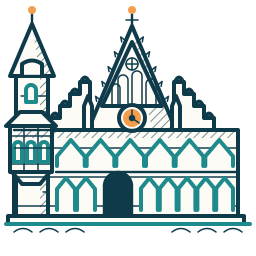
- Town Hall The Old Town Hall on the Market Square: the seat of Wrocław's city council and courts, built in stages from the end of the 13th century into the 16th, now home to the Museum of Bourgeois Art.
- Cathedral The Gothic Archcathedral of St John the Baptist on Cathedral Island, badly damaged in 1945 and rebuilt in the years after.
- Racławice Panorama A painting 15 by 114 metres, made by Jan Styka and Wojciech Kossak for the centenary of the Kościuszko Uprising, shown in Lwów in 1894 and in Wrocław since 1985.
- National Museum The National Museum in Wrocław, housed in a building put up in 1883–1886 as the seat of the Province of Silesia's administration, on the south bank of the Oder.
- Copernicus Park The park on the line of the old moat — Google Maps calls it Copernicus Park, the city the Old Town Garden — with the puppet theatre beside it and a monument to Copernicus at its eastern end.
- Centennial Hall A reinforced-concrete hall designed by Max Berg, built in 1911–1913 and on the UNESCO World Heritage List since 2006.
- Four Domes Pavilion Hans Poelzig's exhibition pavilion of 1912–13 beside Centennial Hall: a film studio from 1953, and since 2016 the National Museum's contemporary art museum.
- Tumski Bridge The steel bridge of 1889 between Piasek Island and Cathedral Island, once hung with couples' padlocks, which are now forbidden.
- Monuments and fountains Statues, monuments and fountains across the city, from St John of Nepomuk and the Fredro monument to Bolesław Chrobry and Train to Heaven.
- Market Square The Market Square, laid out after 1241 and rebuilt after 1945, with the Town Hall in the middle.
- Market Hall The market hall: a brick building with two towers, whose roof rests on reinforced-concrete arches.
- University of Wrocław The Baroque main building on the Odra, begun in 1728 for a Jesuit university.
- University Church The Jesuit church of the Most Holy Name of Jesus, built in 1689–1698 beside what is now the University's main building.
- Wrocław Opera The city theatre of 1841, home to the Wrocław opera since 1945.
- Church of St Elizabeth The Gothic church by the Market Square, burned in 1975 and 1976, and rebuilt over more than twenty years.
- White Stork Synagogue Built in 1829, vandalised but not burned in 1938, restored as a place of worship and a cultural centre.
- St Vincent and St James The Gothic church on Nankiera Square where Duke Henry II the Pious was buried in 1241, the Greek Catholic cathedral since 1997.
- Holy Cross and St Bartholomew The Gothic church on Cathedral Island with two churches on two storeys, founded in 1288 by Duke Henry IV Probus.
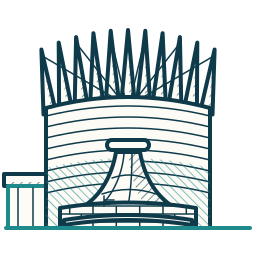
- Wrocław Contemporary Museum MWW, a municipal museum of contemporary art since 2011, in a round air-raid shelter of 1942 on plac Strzegomski, with Andrzej Jarodzki's Train to Heaven beside it.
- Motorisation Museum at Topacz Castle Cars and motorcycles from the interwar years to the People’s Republic, and Rolls-Royce and Bentley cars, at Topacz Castle in Ślęza, outside Wrocław.
- Zoo and Afrykarium The city's zoological garden, open to the public since 1865, with the Afrykarium, an oceanarium of African animals, added in 2014.
- Japanese Garden A garden in Szczytnicki Park, laid out in 1913 for the Centennial Exhibition and reopened in 1999 after restoration.
- Iglica A steel spire next to the Centennial Hall, put up in 1948 for the Recovered Territories Exhibition.
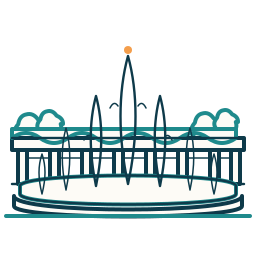
- Multimedia Fountain A show of water, light and music at the Pergola beside the Centennial Hall, opened on 4 June 2009.
- Kolejkowo A model-railway exhibition on the first floor of Sky Tower, with miniature trains and a miniature Wrocław.
- Wrocław Main Station The main railway station: a brick Neo-Gothic building, built in 1855–1857 and renovated in 2010–2012.
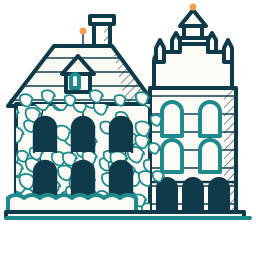
- Hansel and Gretel Two houses named after Hansel and Gretel. Gretel is the seat of the Society of Friends of Wrocław.
- Renoma A department store on Świdnicka Street, opened on 2 April 1930 as the Wertheim store and rebuilt and extended in 2009.
- City Arsenal A listed Gothic arsenal on Cieszyńskiego Street, holding the City Museum's weapons collection and its archaeology collection, founded in 1815.
- Royal Palace A baroque-classicist former Prussian royal residence on Kazimierza Wielkiego Street, now the City Museum's Historical Museum, with its Royal Chambers.
- Bastion Sakwowy An old fortification bastion made into a hill park with a colonnade, restored in 2024, on the Old Town Promenade beside the City Moat.
- Szczytnicki Park A park of more than 100 hectares begun in 1783, holding the Japanese Garden, the Centennial Hall and the wooden church of St John of Nepomuk.
- Ossolineum A national library and institute founded in 1817, in a former monastery on Szewska Street, with a baroque garden in its courtyard.
- NFM The National Forum of Music: a concert-hall building on Wolności Square, designed by Kuryłowicz & Associates and opened in 2015.
- Sky Tower A skyscraper on Powstańców Śląskich Street with an observation deck and, on its first floor, Kolejkowo.
- Pillory The pillory on the Market Square: a replica, put up in 1985, of the original of 1492. It is described on the Market Square page.
- Witches' Bridge Mostek Czarownic, also called Mostek Pokutnic: a bridge joining the two towers of the Church of St Mary Magdalene.
- Polinka The cable car over the Odra that links the Wrocław University of Science and Technology buildings on Wybrzeże Wyspiańskiego with those on Na Grobli Street.
- Gas lamps Gas street lamps light the lanes of Cathedral Island, and a lamplighter, the latarnik, lights them each evening and puts them out in the morning.
- Wrocław Stadium A stadium at 1 Śląska Avenue, officially opened in September 2011 and one of the venues of UEFA Euro 2012.
- Water Tower The water tower by Wiśniowa Avenue and Sudecka Street, built in 1905 to a design by the German architect Karl Klimm.
- Hydropolis A centre for knowledge about water, in the covered sand filter of 1890 that spent a century as the city's main reservoir of drinking water.
- Salt Square Plac Solny: a square in Wrocław beside the Market Square.