Landmark
Four Domes Pavilion
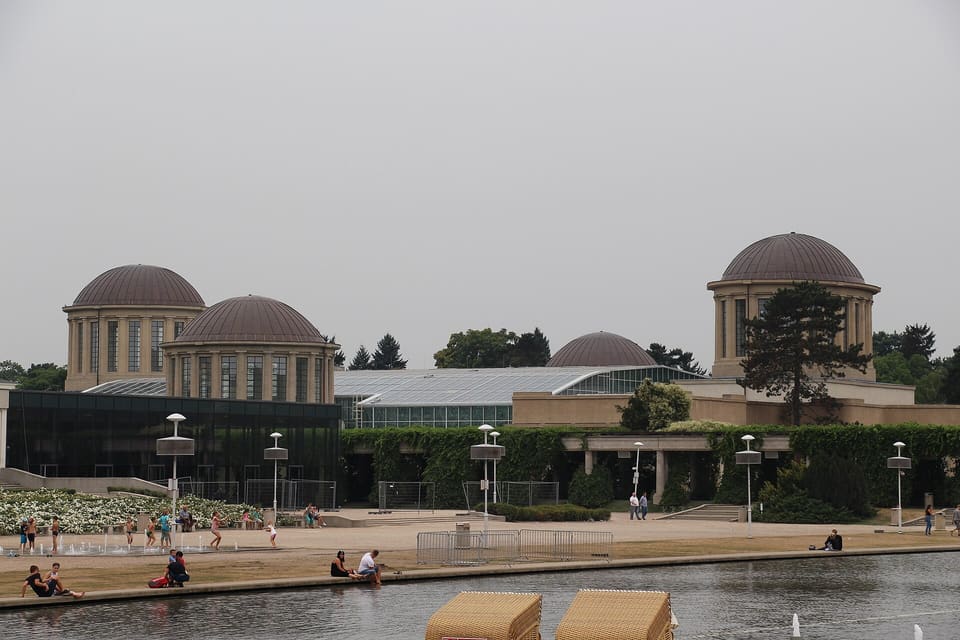
Pawilon Czterech Kopuł, built beside Centennial Hall in 1912 and 1913 to Hans Poelzig's design, a film studio for half a century, and since 2016 the National Museum's museum of contemporary art.
Fred Romero from Paris, France Wikimedia Commons CC BY 2.0
Three lives
Hans Poelzig designed it, and it went up in 1912 and 1913 next to Max Berg's Centennial Hall, for the Historical Exhibition of 1913. Four domes on colonnaded drums stand over a long glazed hall; it was built to hold exhibitions and events, and it did until 1945.
From 1953 it was a film studio. The Wrocław Feature Film Studio worked in it, and Popiół i diament, Rękopis znaleziony w Saragossie and the Sami swoi trilogy were made there.
The building passed to the National Museum in 2009, was overhauled, and reopened on 25 June 2016 as its museum of contemporary art.
What is inside
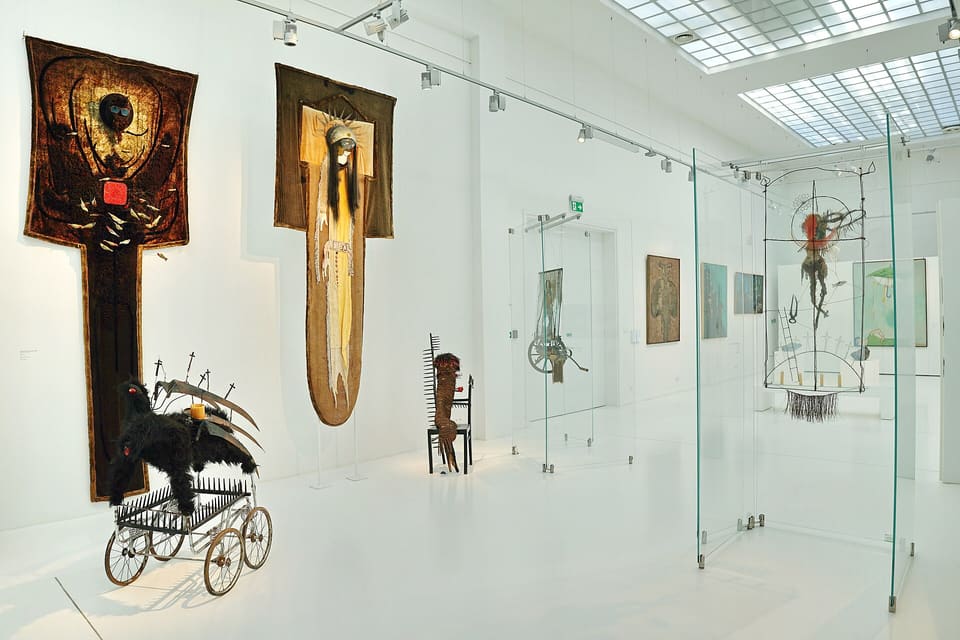
The collection is Polish art of the 20th and 21st centuries — more than thirty thousand works across painting, print, drawing, sculpture, glass, ceramics and photography.
Strumyczek Wikimedia Commons CC BY-SA 4.0
One ticket, four places
This pavilion, the National Museum, the Racławice Panorama and the Ethnographic Museum are one institution, and they sell one ticket between them. A ticket bought to see the Panorama also admits you free to the permanent exhibitions of the other three, for three months from the day you see it.
Seeing it
It stands in the Szczytnicki park complex east of the centre, beside Centennial Hall, the multimedia fountain and the Japanese Garden, and the zoo is across the road.