Landmark
Town Hall
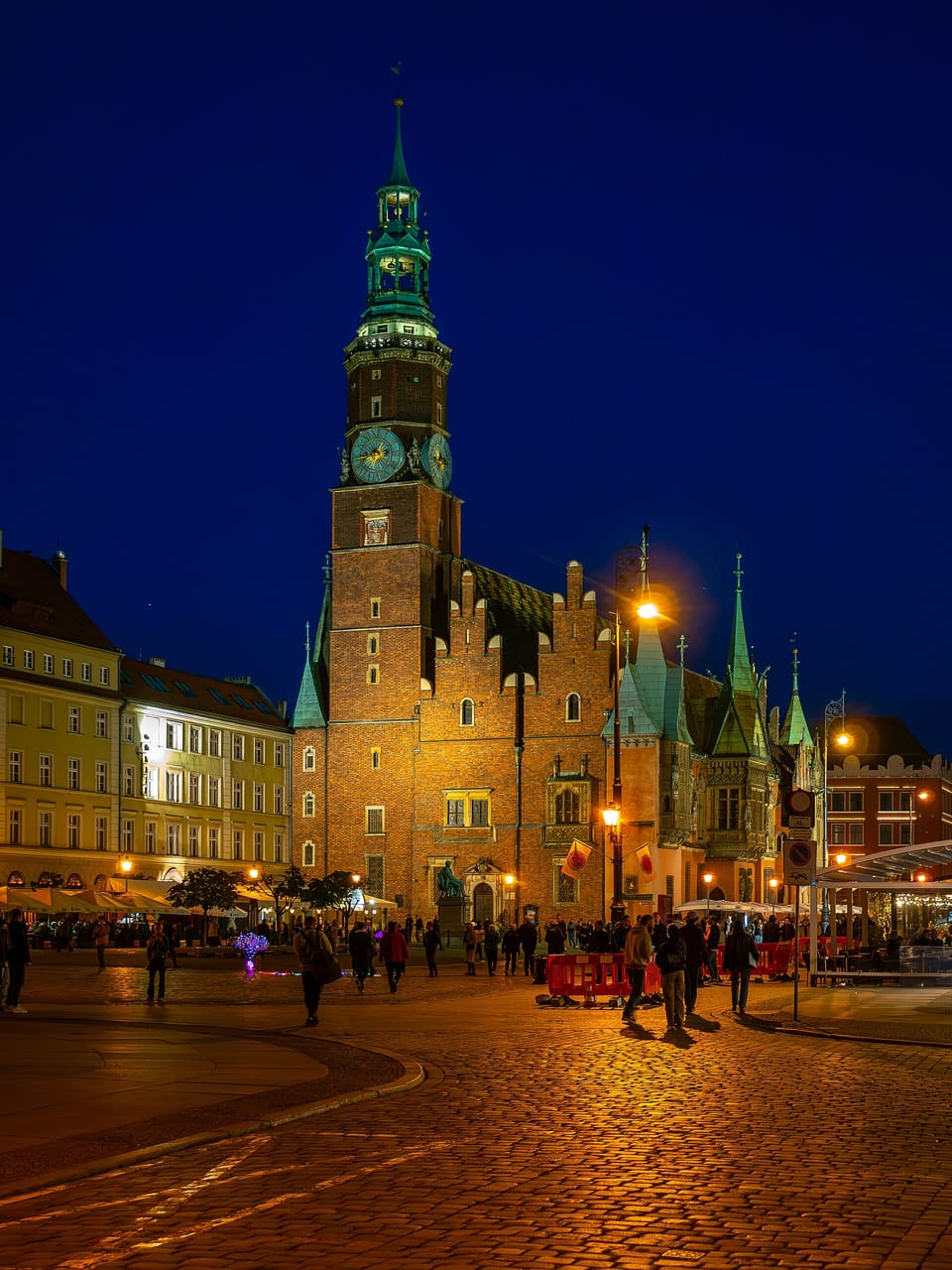
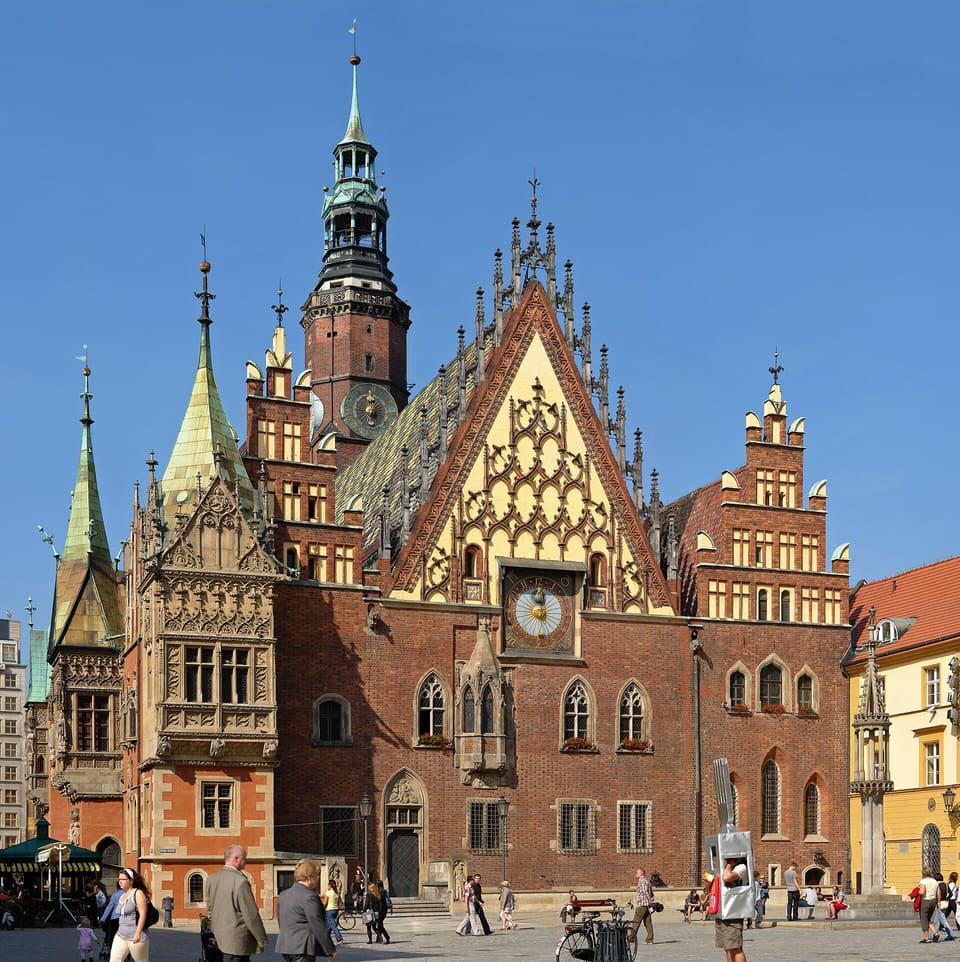
The Ratusz: the Old Town Hall on the Market Square (Rynek), the seat of Wrocław's city council and courts, built in stages from the end of the 13th century into the 16th, now home to the Museum of Bourgeois Art.
Kolossos Wikimedia Commons CC BY-SA 3.0
What it is
The Town Hall stands in the centre of the Market Square, Wrocław's market square. It was the seat of the city authorities and of the city's courts.
Jacek Halicki Wikimedia Commons CC BY 3.0
Built in layers
The Town Hall was built in several stages over about 250 years, from the end of the 13th century into the 16th. The oldest part dates from around 1299. The rebuilding of 1470–1480 enlarged the building by almost half and gave it its final shape.
The tower is 66 metres high. Under its spire hangs a fixed bell of a tonne and a half, roped to the clock, inscribed with the year 1368. The clock's pendulum is almost eight metres long and passes through two floors of the tower.
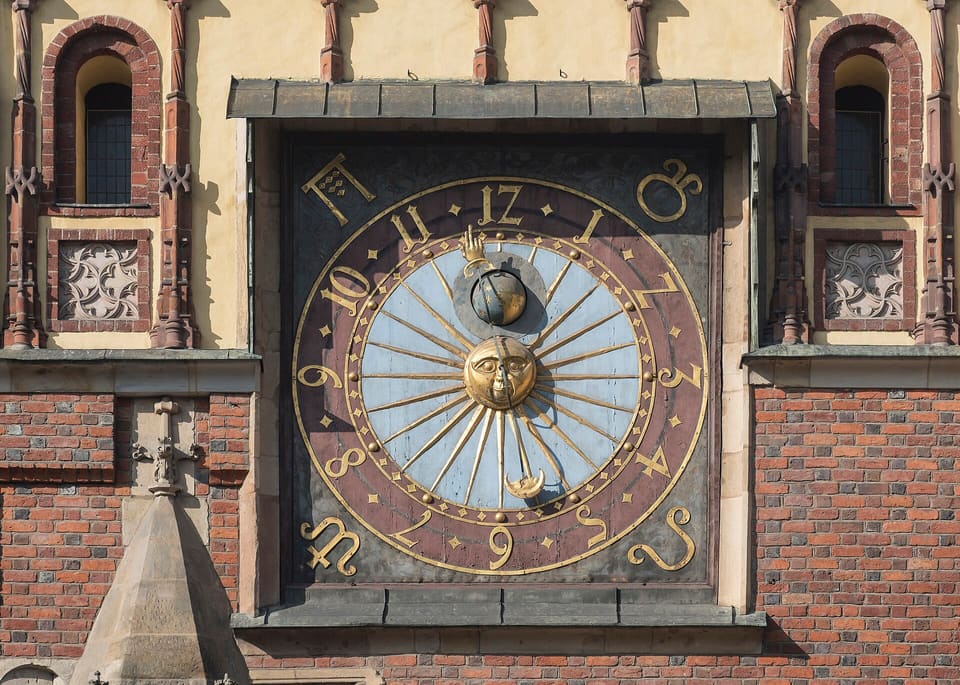
The clock on the east facade was set going in 1580. Its face is cut from larch, and it was fitted when the city changed how it counted the hours: a 24-hour dial in Arabic numerals gave way to a 12-hour one in Roman.
Inside
The Museum of Bourgeois Art.
The Town Hall houses the Museum of Bourgeois Art, a branch of the Muzeum Miejskie Wrocławia (Wrocław City Museum) since 2000. It collects and shows objects connected with Wrocław craft workshops and artists.
The rooms shown are the rooms the council used: the Great Hall, which covers more than 650 square metres under a ribbed vault; the Princes' Hall; the Council Chamber and the chamber of the senior councillor; the council chancellery; and the Bourgeois Hall, where marble busts of people connected with the city stand.
Under the hall
An inn has occupied the cellars under the Town Hall since the end of the 13th century: the Piwnica Świdnicka. It is a separate establishment from the museum upstairs.