
Landmark
Hydropolis
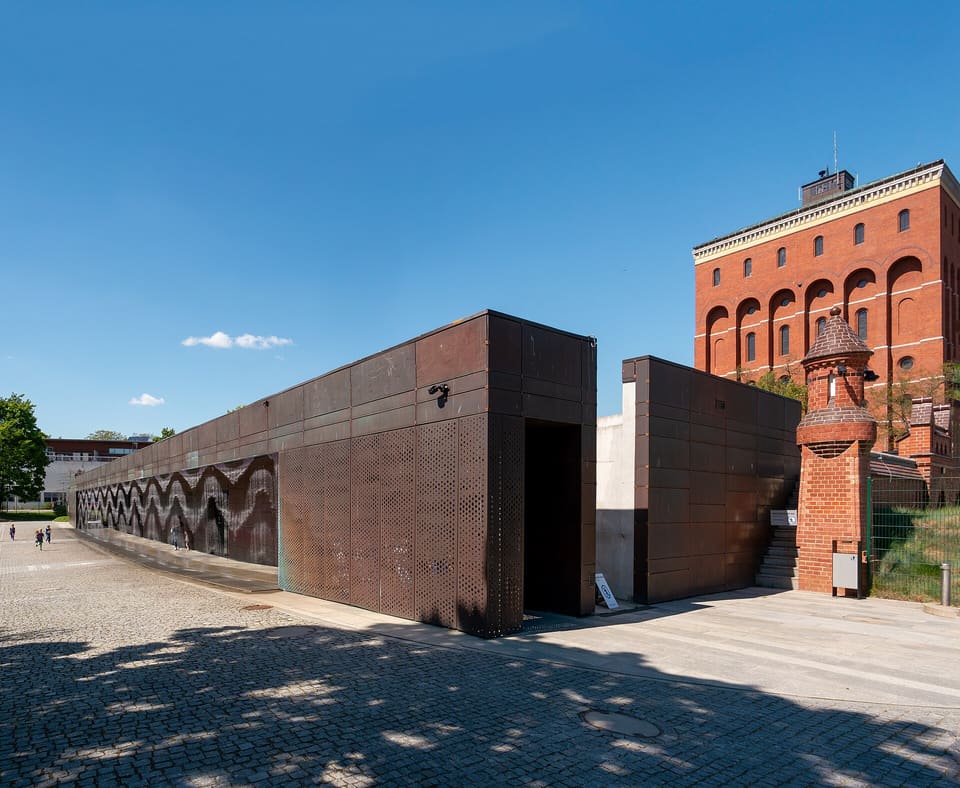
A centre for knowledge about water, in the covered sand filter the city built in 1890 and then spent a century using as its main reservoir of drinking water.
Matti Blume Wikimedia Commons CC BY-SA 4.0
.jpg)
The tank under the grass
The waterworks at Na Grobli had four open sand filters. Between 1890 and 1892 it got a fifth, and this one was roofed: 4,600 square metres of it, hidden under an earth embankment. When the city changed over from river water to groundwater the filter had nothing to filter, so in 1905 the sand and gravel were dug out and it became the main reservoir of drinking water for Wrocław — twelve million litres, tank number one.
It held that job for about a hundred years. Shells went through its roof in the fighting of 1945 and it was patched; the Oder flood of 1997 filled it; it was taken out of service at the end of 2011, and that is when somebody decided what to do with it instead. It had been entered in the register of monuments in 2002.
Four years of work turned it into an exhibition, and it opened on 5 December 2015. The city put the bill at 59 million złotys, of which 35.5 million was the restoration of the tank itself, and recorded that the water company borrowed nothing to do it.
What is in it
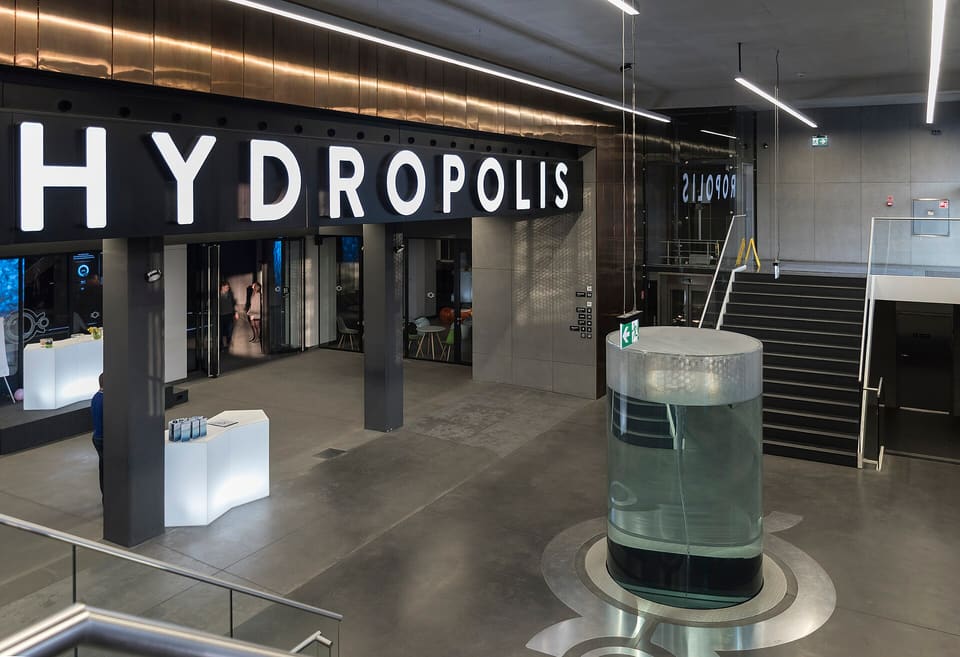
The exhibition covers 4,070 square metres of the old tank, and the route through it is 305 metres long: eight zones and sixty-odd installations, all of them below ground and on one level. It is dark in there, which the operator says plainly before you go.
Three things are worth going for. Planeta Wody throws a film around a screen 65 metres in circumference, with the Earth two metres across in the middle of it. In the Depths there is a replica of the bathyscaphe Trieste, the vessel that reached the bottom of the Mariana Trench in 1960, and you can put your head inside it — Don Walsh, who was in the real one, is one of the centre's ambassadors. And the water printer out in front, before the ticket desk, is a falling curtain 46.5 metres long that prints patterns in the water as it drops.
There are no live animals: the sharks and the shoals are models and screens.
Jacek Halicki Wikimedia Commons CC BY-SA 4.0

Going
Hydropolis is at 17 Na Grobli Street, about two kilometres south-east of the Market Square (Rynek) and two tram stops from Galeria Dominikańska. Trams 3, 4, 5, 16 and 19 stop at Wróblewskiego Square, and it is a 650-metre walk from there over the Oława. In summer a footbridge connects it with the zoo side of the river.