
St Vincent and St James
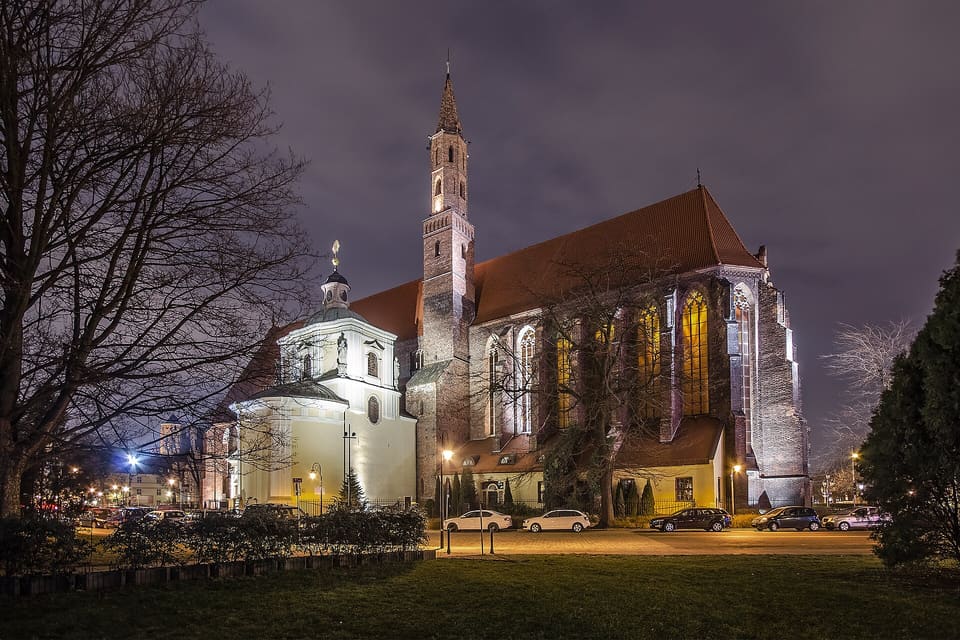
The Greek Catholic cathedral on Nankiera Square: a Gothic church founded for the Franciscans by Duke Henry II the Pious, who was buried there in 1241.
Sławomir Milejski Wikimedia Commons CC BY-SA 3.0 pl
What it is
The Cathedral of St Vincent and St James, katedra greckokatolicka św. Wincentego i św. Jakuba in Polish, stands on Nankiera Square (plac Biskupa Nankiera), the square the Market Hall is on. It is the cathedral of the Greek Catholic Church's eparchy, or diocese, of Wrocław–Koszalin, which follows the Byzantine-Ukrainian rite.
The eparchy was called Wrocław–Gdańsk until 2020, when the Pope created a separate eparchy of Olsztyn–Gdańsk and gave this one its present name.
Henry the Pious's church
Duke Henry II the Pious and his wife Anna founded it as the church of St James, for Franciscan friars brought from Prague. Henry was killed fighting the Mongols at Legnica in 1241 (see the history), and he was buried here, in the crypt.
The church you see is Gothic, the result of rebuilding and enlarging it in the fourteenth and fifteenth centuries.
How it became St Vincent's
St Vincent was the patron of a different house: the Premonstratensian (Norbertine) abbey at Ołbin, which was pulled down in 1529. Its canons moved into the Franciscans' church and in 1530 reconsecrated it to St Vincent. The church is now dedicated to both saints.
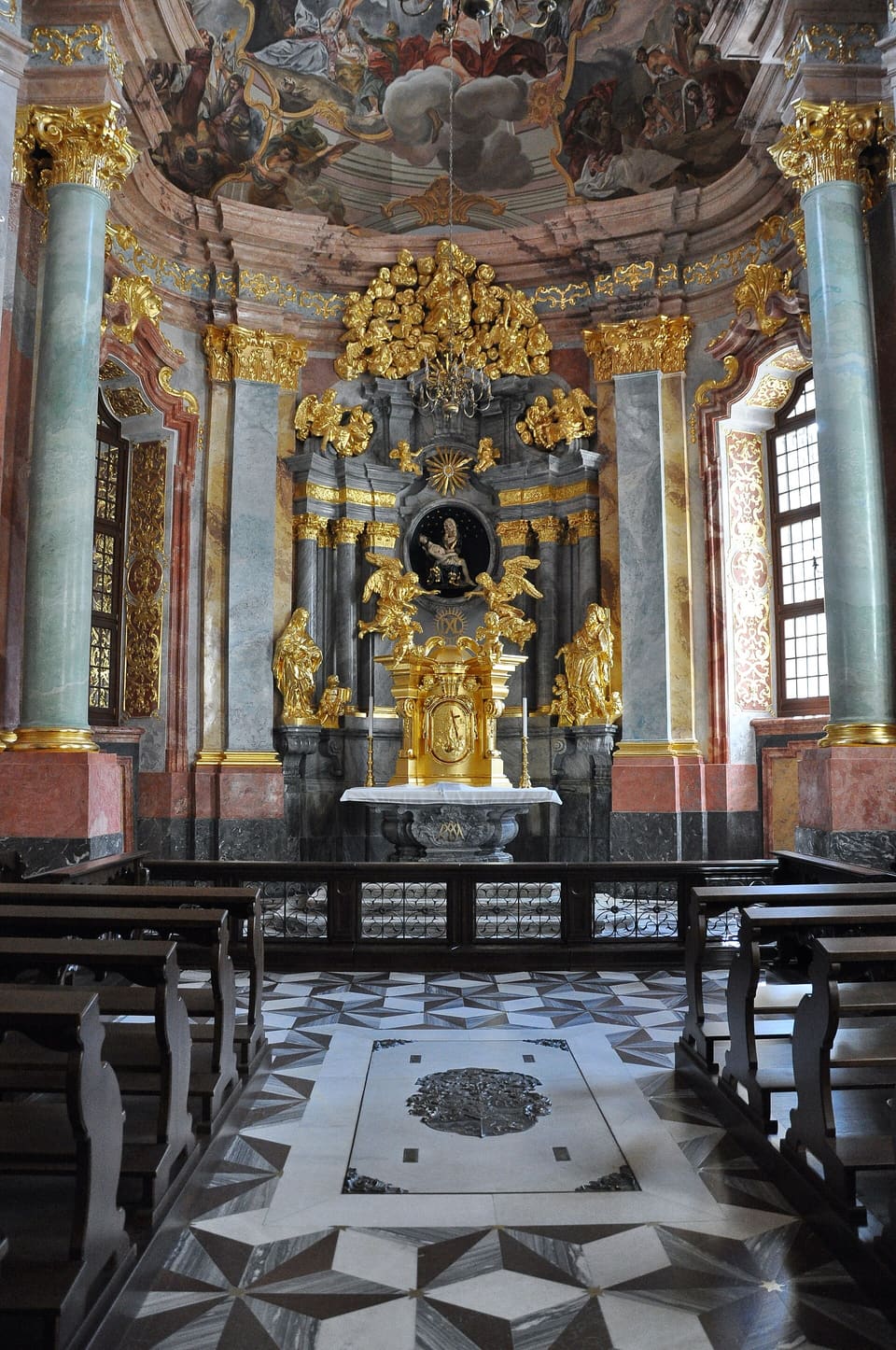
In the 1720s the abbot, Ferdinand von Hochberg, had a Baroque chapel built against the south side, the Hochberg Chapel: the pale domed building beside the brick church in the photograph above. When the monastery was secularised in 1810, the church became a parish church.
1945 and after
Badly damaged, and rebuilt until 1991.
The church was badly damaged in the last days of the Second World War. Rebuilding it took decades and was finished in 1991. The Hochberg Chapel, wrecked by bombing in 1945, was restored between 2000 and 2013.
A cathedral since 1997
In 1997, during the International Eucharistic Congress in Wrocław, Pope John Paul II and Cardinal Henryk Gulbinowicz gave the church to the newly created Greek Catholic diocese, and it became its cathedral.
Inside
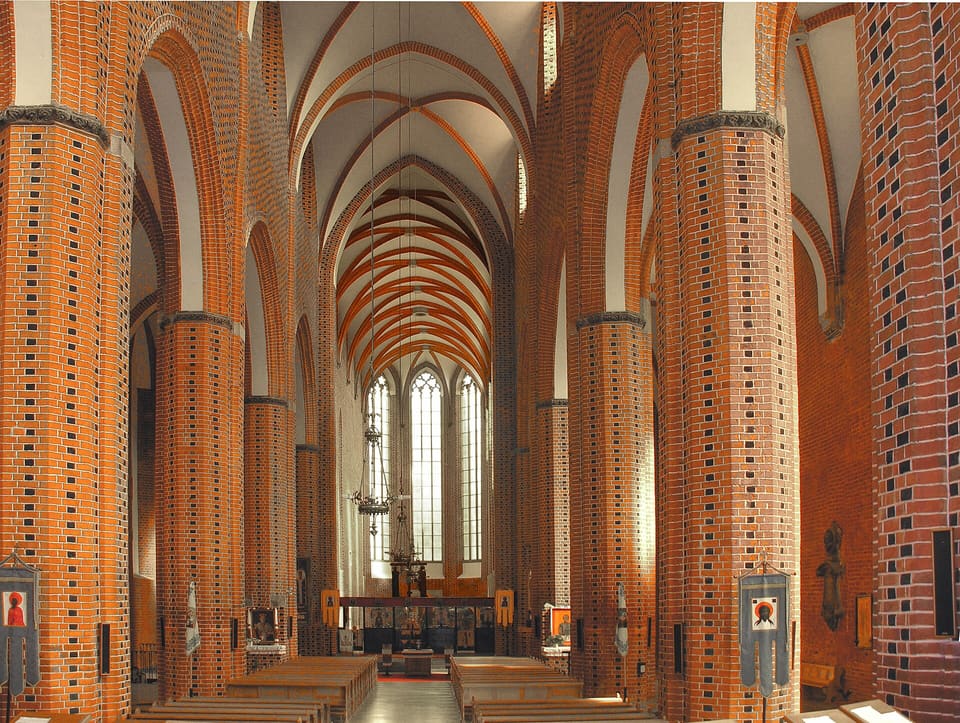
The interior is Gothic brick under ribbed vaults.
Bonio Wikimedia Commons CC BY 3.0
The Hochberg Chapel opens off the south aisle.
Strumyczek Wikimedia Commons CC BY-SA 4.0
Seeing it
Service times are on the eparchy's page for the cathedral, in Polish. The city's other churches are on one page.