Racławice Panorama
Panorama Racławicka: a painting 15 by 114 metres, made by Jan Styka and Wojciech Kossak for the centenary of the Kościuszko Uprising, shown in Lwów in 1894 and in Wrocław since 1985.
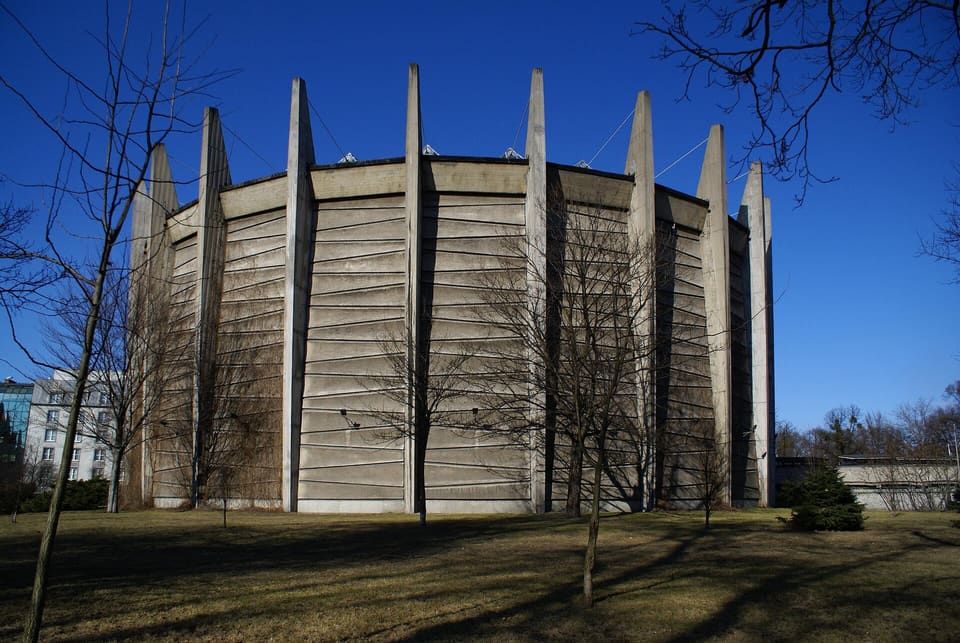
Barbara Maliszewska Wikimedia Commons CC BY-SA 3.0 pl
What it shows
The Battle of Racławice, fought on 4 April 1794 during the Kościuszko Uprising. The insurgent army under General Tadeusz Kościuszko won against Russian forces under General Aleksander Tormasov; the kosynierzy, troops armed with scythes, took part.
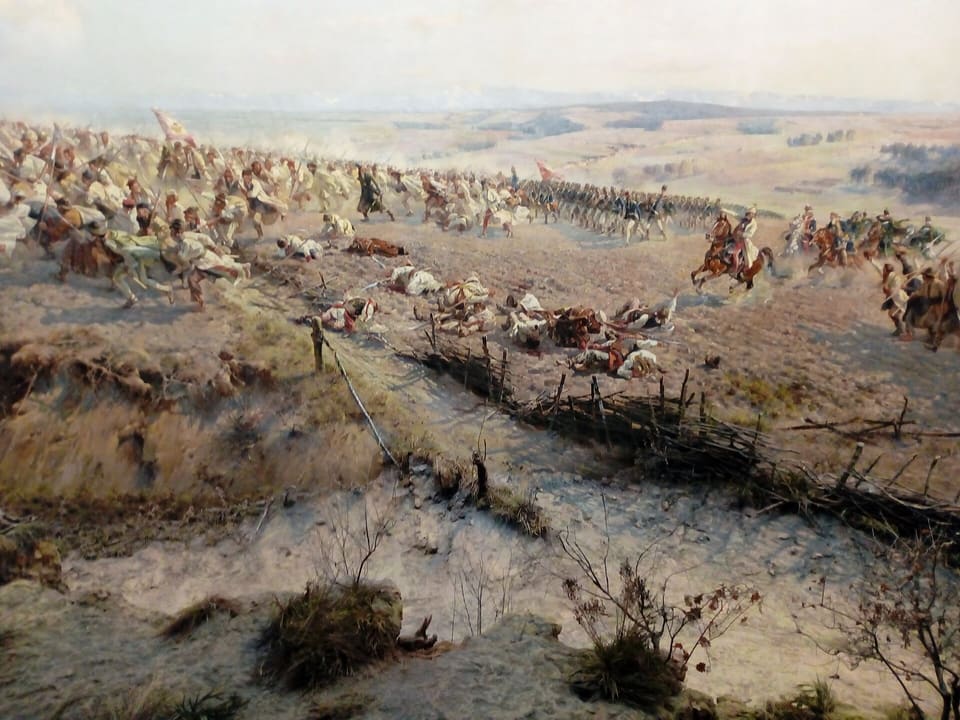
Ptjackyll Wikimedia Commons CC0
How it was made
The idea came from Jan Styka (1858–1925), a painter from Lwów, who invited Wojciech Kossak (1856–1942) to work with him. Seven more painters worked on it: Ludwig Boller, Tadeusz Popiel, Zygmunt Rozwadowski, Teodor Axentowicz, Włodzimierz Tetmajer, Wincenty Wodzinowski and Michał Sozański. They painted it between July 1893 and May 1894, for the 100th anniversary of the uprising. The canvas was woven to order in Brussels and the iron structure of the rotunda was made in Vienna; the rotunda, in Stryjski Park in Lwów, was ready in July 1893. The Panorama opened on 5 June 1894 at the General National Exhibition in Lwów.
The illusion of standing inside the battle rests on a special perspective, lighting, artificial terrain and a darkened, winding approach to the platform.
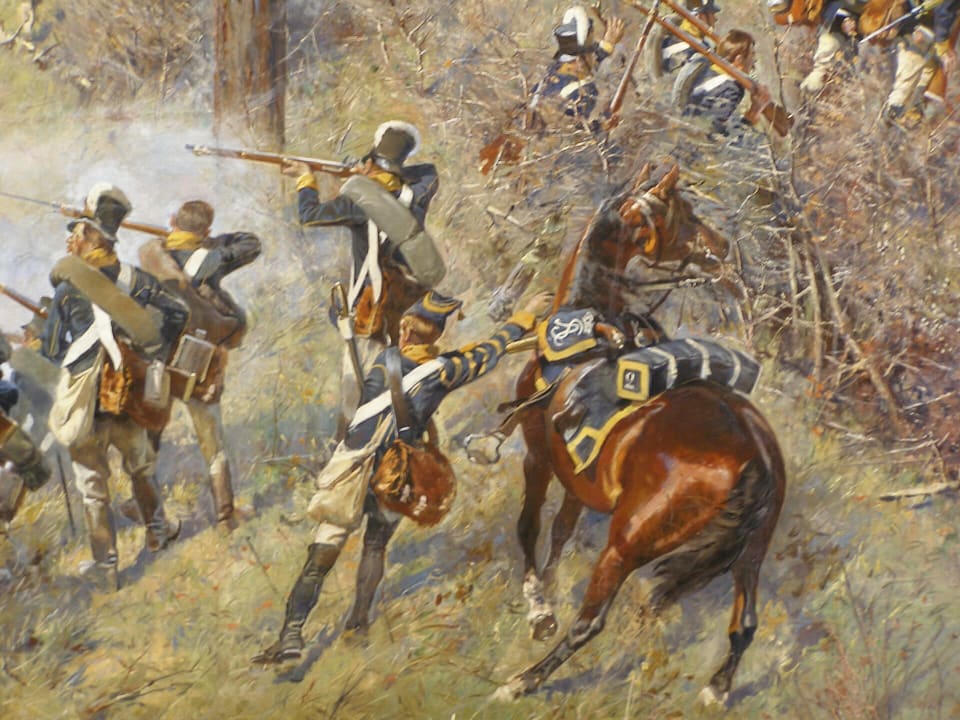
Andrzej Otrębski Wikimedia Commons CC BY-SA 3.0
How it got here
From Lwów to Wrocław.
After the Second World War the painting was transported to Wrocław together with part of the Ossolineum collection from Lwów. For many years it was not shown to the public: its subject was inconvenient to the authorities of the Polish People's Republic, and efforts to restore and exhibit it were held up. It went on show on 14 June 1985.
What happened between
The canvas came by rail and was unloaded at Brochów station in Wrocław on 21 July 1946.
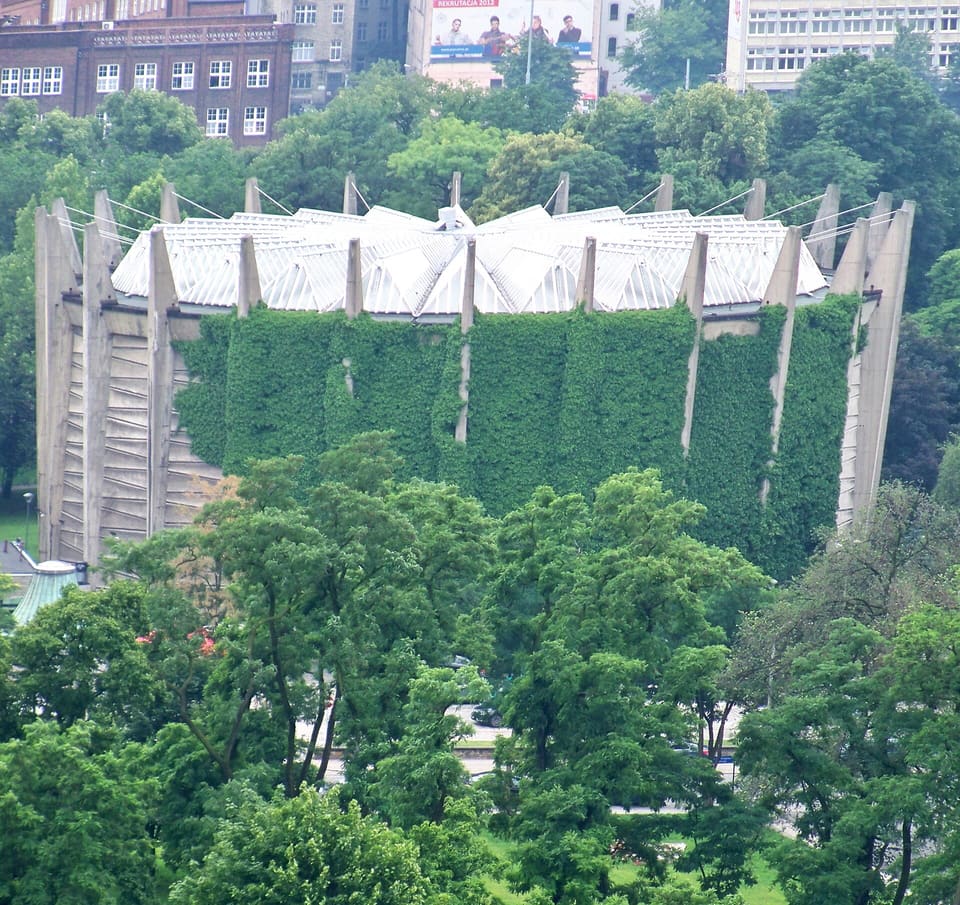
A competition for a building to hold it was held in 1957 and won by two architects, Ewa and Marek Dziekoński; Jan Weryński designed the structure. Mostostal assembled the reinforced concrete frame between 12 and 24 June 1967, and by that summer the rotunda stood closed to the weather. Work on it went no further for years. The painting stayed in store, carried on the inventory of the city's Historical Museum until November 1980 and entered in the National Museum's in August 1981.
Conservation ran from 25 November 1981 to 29 May 1985, under Stanisław Filipiak. The rotunda opened sixteen days after the work on the canvas ended.
Seeing it
The rotunda is at Jana Ewangelisty Purkyniego 11, a few minutes' walk from the Market Square.
One ticket covers more than this. The Panorama, the National Museum, the Four Domes Pavilion and the Ethnographic Museum are one institution: a ticket bought to see the Panorama admits you free to the permanent exhibitions of the other three for three months from the day you see it.
Links
- Visiting information, opening hours and prices mnwr.pl
- Tickets and viewing times bilety.mnwr.pl
- The city’s page on the Panorama (in Polish) wroclaw.pl
- The Panorama on the Wrocław tourism portal visitwroclaw.eu