Wrocław
History
A thousand years on the Odra, under Piast, Bohemian, Habsburg, Prussian, German and Polish rule. The colour of the line says who was governing.
The city, in order
-
c. 1000
Piast Poland
A bishopric on the island
A Piast stronghold stood on Ostrów Tumski, the island in the Odra. In 1000, at the Congress of Gniezno, a bishopric was founded here, under the new archbishopric of Gniezno. A cathedral has stood on that spot ever since.
-
1241
Piast Poland
The Mongols
Facing the Mongol invasion, the town was abandoned and burned on the duke’s orders, and its people sheltered in the castle.
-
1241–1261
Piast Poland
Re-founded, then given its own law
The town was re-founded in 1241 or 1242, and the Rynek dates from that new layout. Twenty years later, in 1261, it took Magdeburg law and with it the right to govern itself.
-
1335
Bohemia
To the Crown of Bohemia
From 1335 the city and its duchy were under Bohemian sovereignty, and shared the political fate of Silesia.
-
1526
The Habsburgs
To the Habsburgs
In 1526 Wrocław passed with the rest of Silesia to the Habsburgs. It was governed from Vienna for two centuries.
-
1741
Prussia
Prussia takes Silesia
Prussia took the city in the First Silesian War: from 1741, and formally from 1742. As Breslau it became the capital of the Prussian province of Silesia, and later part of Germany.
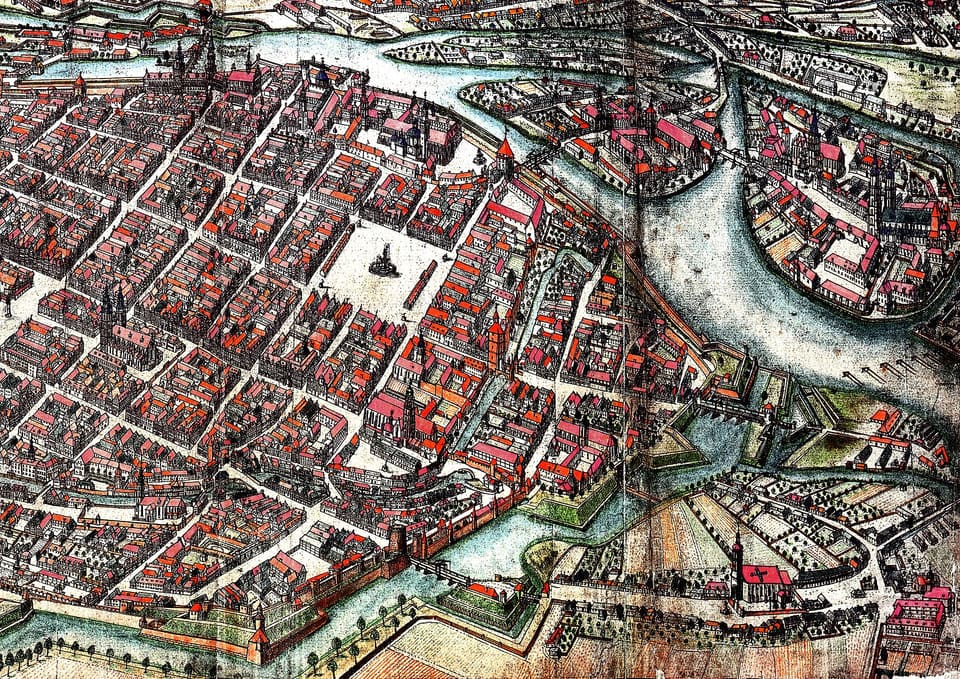
Breslau from the air, before anyone could fly: the walled city on both banks of the Odra with its islands, drawn by Friedrich Bernhard Werner between 1742 and 1750, the first years of Prussian rule.
Friedrich Bernhard Werner Wikimedia Commons Public domain
-
1806–1807
Prussia, under French occupation
Siege, and the walls come down
French forces under Jérôme Bonaparte besieged the city from late 1806, and it capitulated on 5 January 1807. Napoleon then ordered most of Silesia’s fortresses demolished, to weaken Prussia for the future. Wrocław’s came down, and the city began to spread past the line they had held it to.
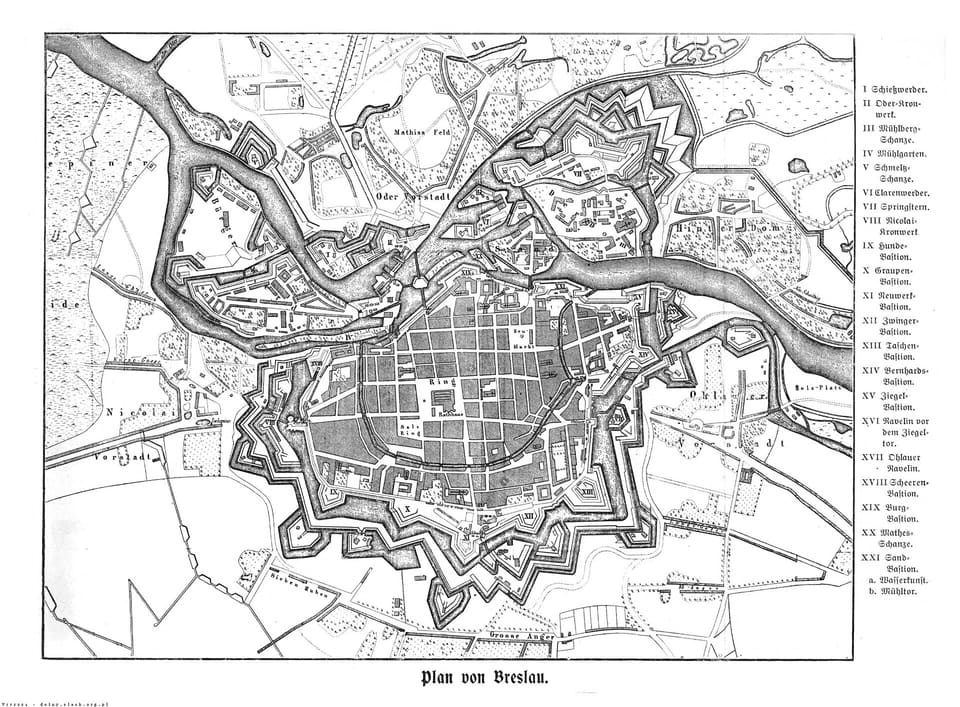
The city as a fortress at the moment of the French siege of 1806–07. The ring of bastions and outworks is numbered I to XXI and named down the right-hand margin — Schießwerder, Oder-Kronwerk, Mühlberg-Schanze, Hunde-Bastion, Zwinger-Bastion and the rest. These are the works Napoleon ordered demolished in 1807.
Gustav Höcker Wikimedia Commons Public domain
-
1811
Prussia
One university out of two
The Catholic Leopoldina of Wrocław and the Protestant Viadrina, moved from Frankfurt an der Oder, were merged into a single state university — the ancestor of the University of Wrocław.
-
1813
Prussia
Breslau calls Prussia to arms
Frederick William III took refuge here in January 1813, the city being free of the French, and it was from Wrocław on 17 March that he issued his proclamation An Mein Volk, calling Prussians, Silesians and others to rise against Napoleon.
-
1945
Germany
Festung Breslau
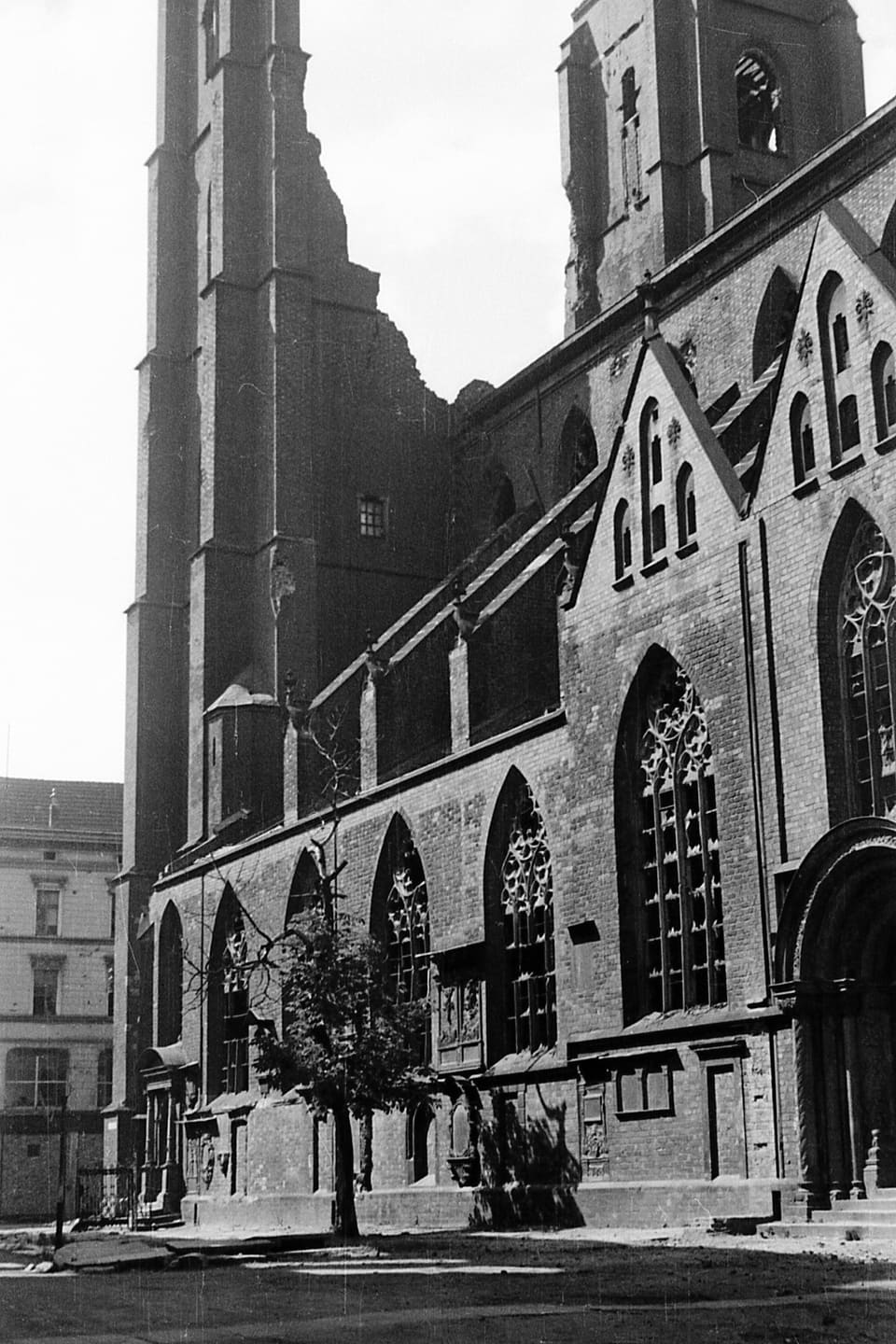
The city was refortified and held as a fortress. It was besieged from February, and the remaining German forces were defeated in May. Much of it was left in ruins.
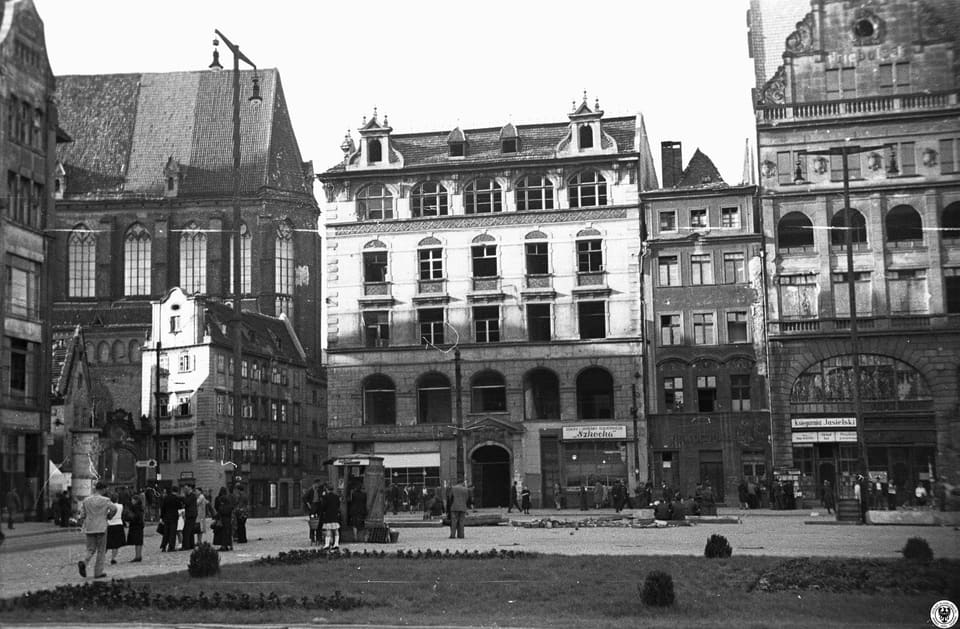
Fot. Bogdan Celichowski. Wikimedia Commons CC BY 3.0
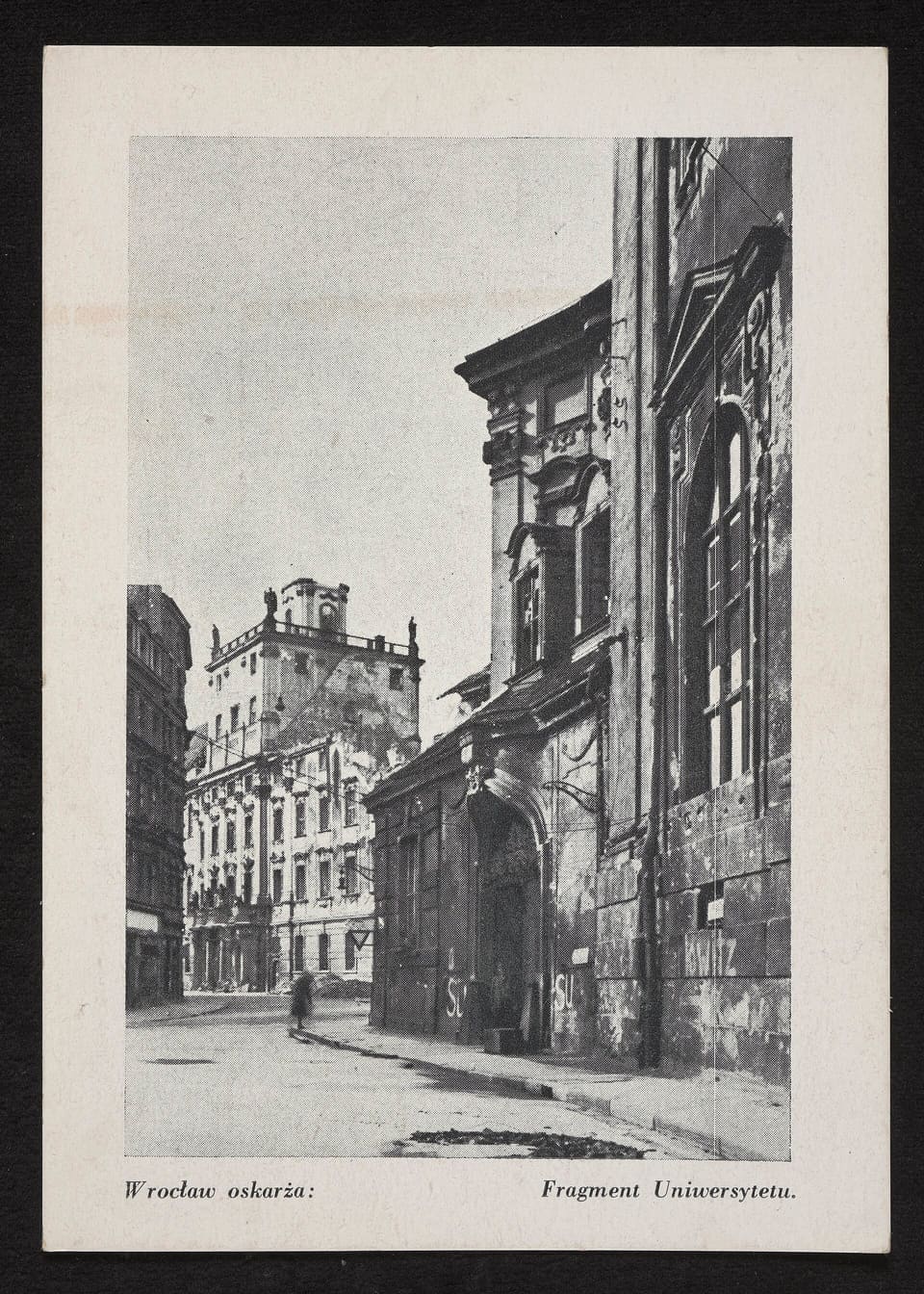
A postcard printed in Wrocław in 1946, captioned Wrocław oskarża: Fragment Uniwersytetu — “Wrocław accuses: a fragment of the University”. The series was published to document what the siege had left.
National Library of Poland Wikimedia Commons Public domain original
-
1945–1948
Poland
A city, and almost everyone in it, changes
In August 1945 Wrocław became part of Poland. Its German inhabitants had fled or were expelled over the following years, and the population was replaced almost entirely. Many of the newcomers came from Lwów, now Lviv in Ukraine.
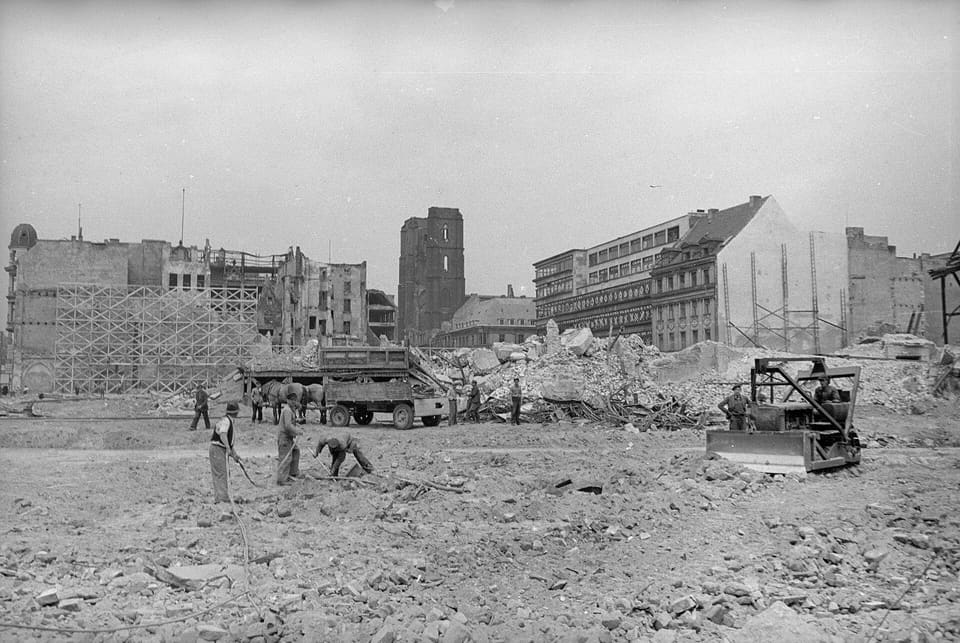
Rubble being cleared by hand, by truck and by bulldozer. Much of the brick recovered from Wrocław’s ruins was shipped east to rebuild Warsaw.
Wojskowa Agencja Fotograficzna Wikimedia Commons Public domain
-
1946–1985
Poland
What came west with them
The Ossolineum, founded in Lwów in 1817, was re-established here with part of its collection. The Panorama Racławicka came in 1946 and went on show in 1985.
H.Z. Wikimedia Commons Public domain
-
June 1997
Poland
The Eucharistic Congress
The 46th International Eucharistic Congress was held in the city, and John Paul II celebrated its closing Mass here on 1 June.
-
July 1997
Poland
The flood
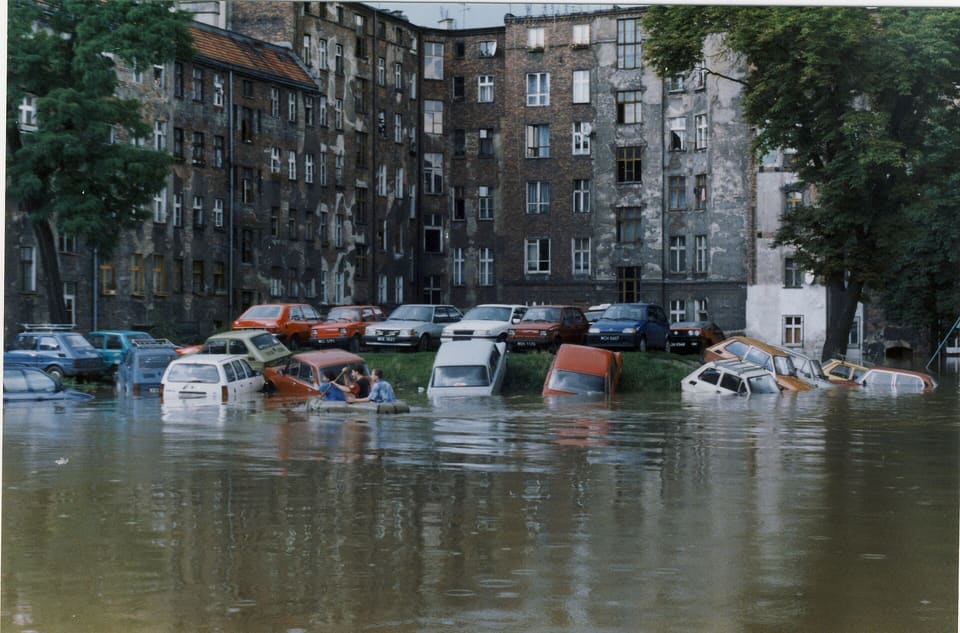
A month later the Odra flooded the city. It is remembered in Poland as the flood of the millennium.
Aleksander Sikora Wikimedia Commons CC BY-SA 3.0
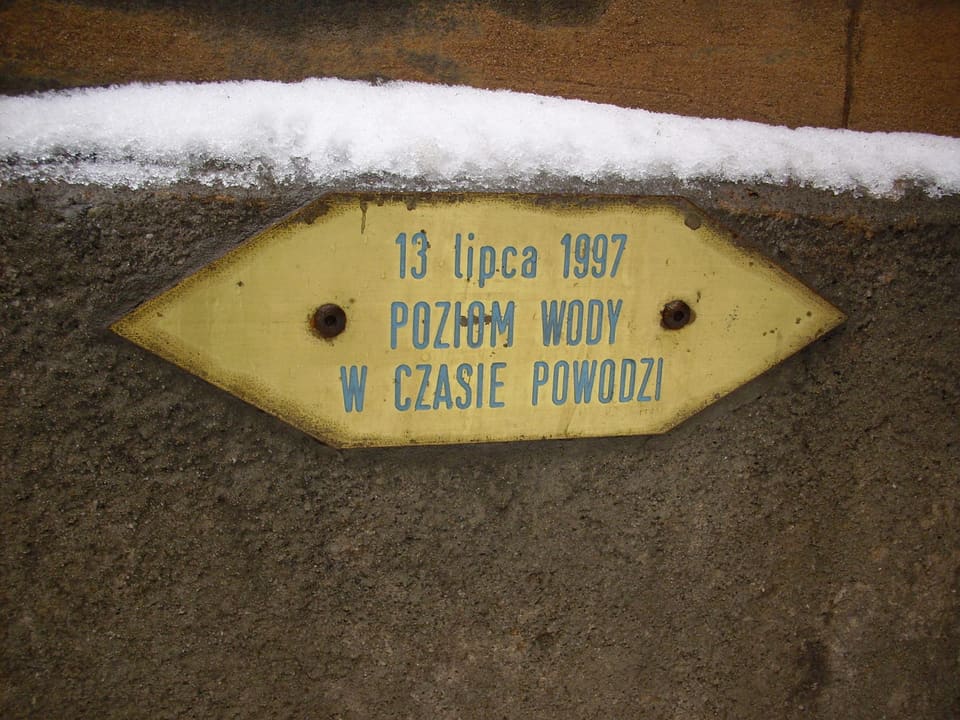
The plate reads 13 lipca 1997 · POZIOM WODY W CZASIE POWODZI — 13 July 1997, the water level during the flood. It is fixed to the NOT building on ulica Piłsudskiego, at the height the water reached.
Grzegorz W. Tężycki Wikimedia Commons CC BY-SA 4.0
-
2016
Poland
European Capital of Culture
Wrocław was a European Capital of Culture for 2016.
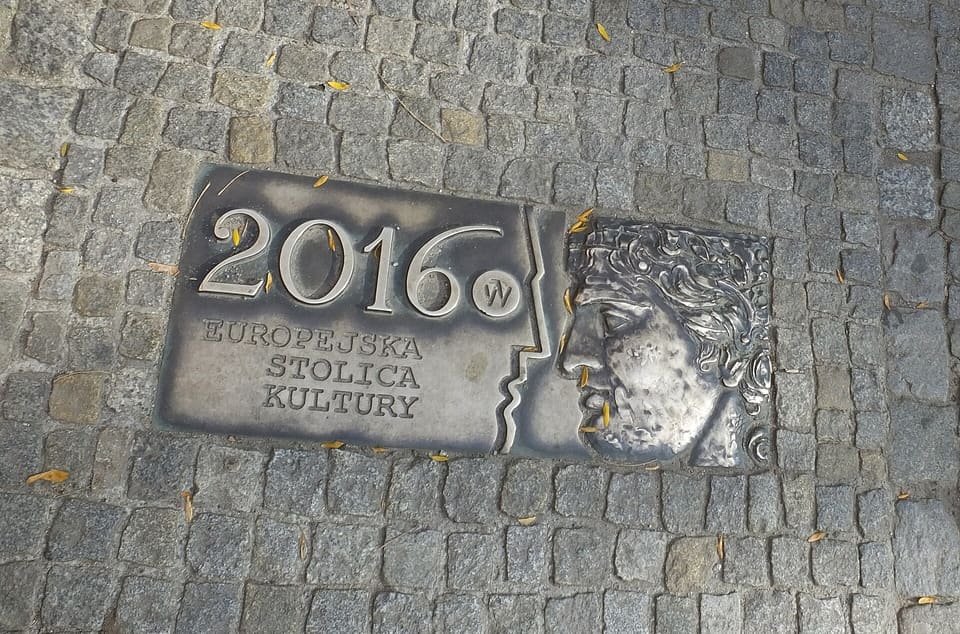
One marker of the History Path, a trail of plaques set into the pavement around the city. This one records 2016, the year Wrocław was a European Capital of Culture.


.jpg)


