
Monuments and fountains
Statues, monuments and fountains on Cathedral Island and Piasek Island, on the Market Square, by the University, along the Old Town moat and further out.
Cathedral Island and Piasek Island
St John of Nepomuk
A stone figure of St John of Nepomuk stands on Plac Kościelny, in front of the Church of the Holy Cross. The register of monuments dates it to 1731. Look up to the top: the saint holds a crucifix raised above his head, under a ring of stars.
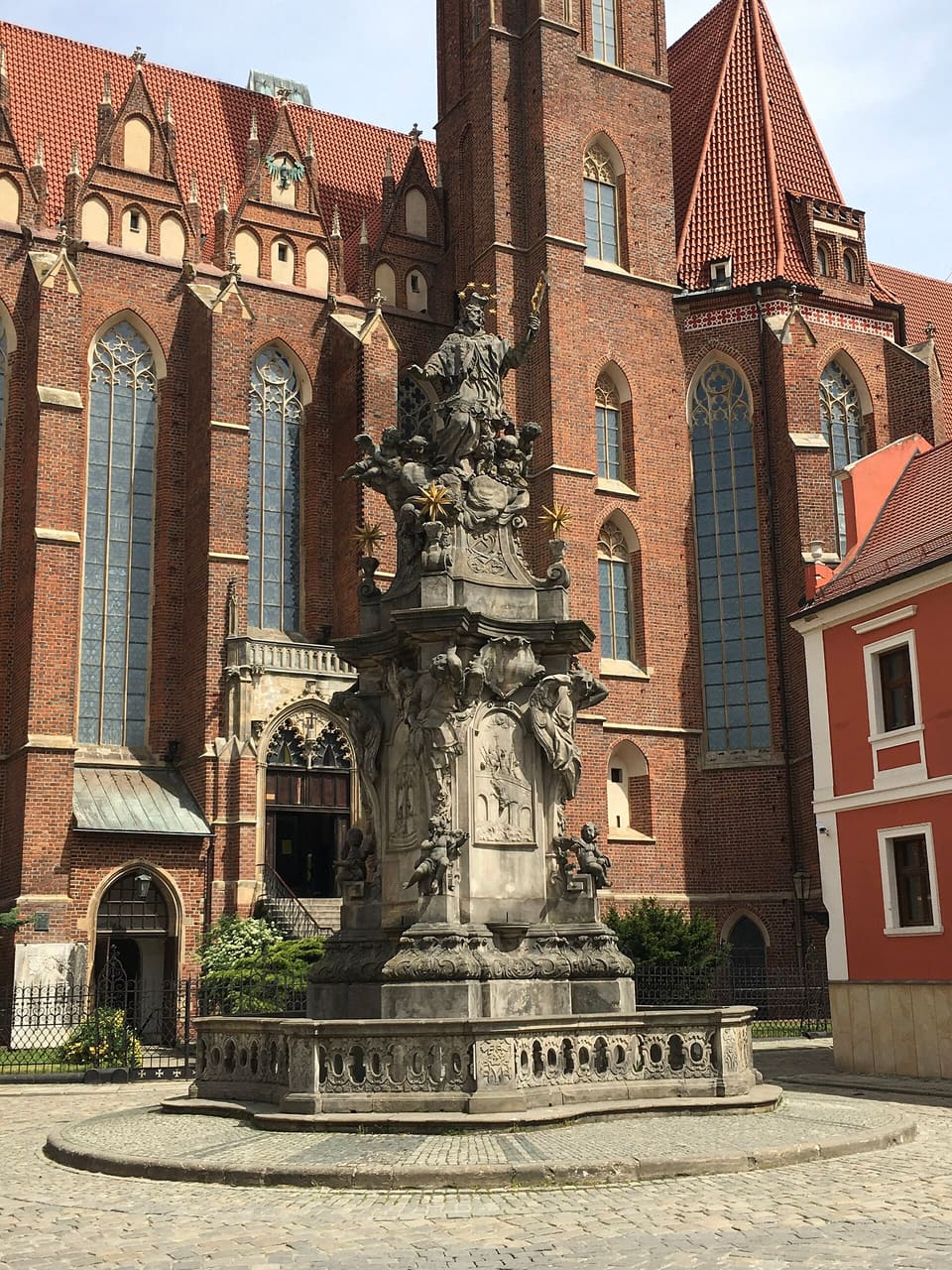
PiotrMig Wikimedia Commons CC BY 4.0

St Hedwig and St John the Baptist
At the Piasek end stand figures of St Hedwig, patron saint of Silesia, and St John the Baptist, patron of the archdiocese and the cathedral.
Cardinal Kominek
A bronze figure of Cardinal Bolesław Kominek stands on Piasek Island, beside Tumski Bridge and in front of the Church of Our Lady on the Sand. It was unveiled on 3 December 2005, forty years after the Polish bishops’ message to the German bishops, and the sculptor was Sławoj Ostrowski.
Read the ground in front of the figure. The inscription, in Polish and German, is a line from that message: przebaczamy i prosimy o przebaczenie, “we forgive and ask for forgiveness”.
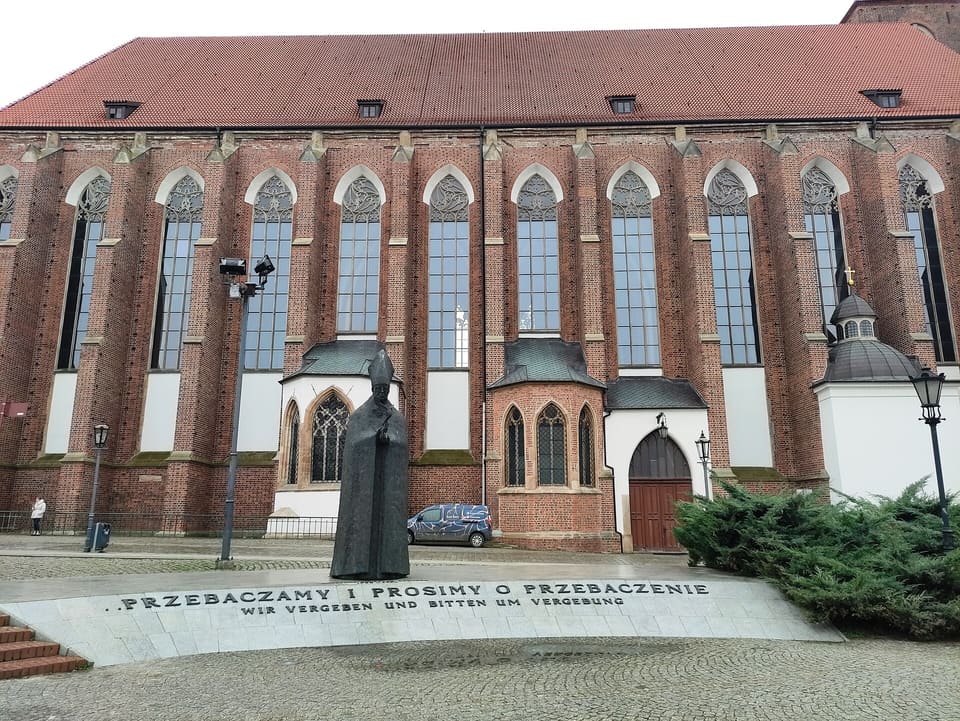
Palickap Wikimedia Commons CC BY 4.0

Pope John XXIII
A granite figure of Pope John XXIII stands on ul. Świętego Marcina on Cathedral Island, near St Martin’s church. It was unveiled on 5 June 1968, and Ludwika Nitschowa designed it. The title of his encyclical, Pacem in terris, “Peace on Earth”, is cut into the base.
It was put up with the backing of the communist authorities, on an idea from the Caritas association, and Archbishop Bolesław Kominek and the Polish bishops spoke against it.
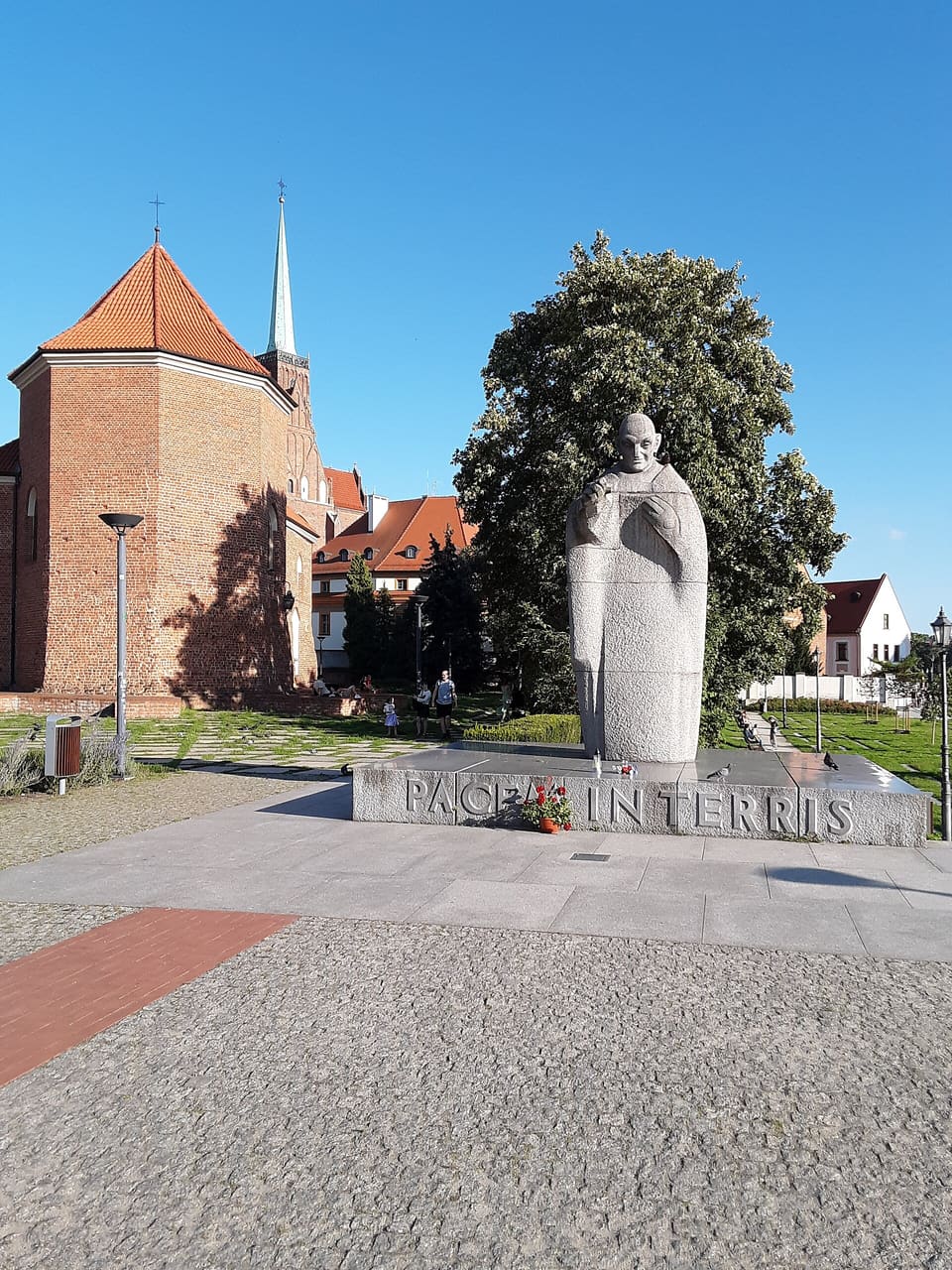
Abzeronow Wikimedia Commons CC BY 4.0

The Market Square
The pillory. The pręgierz is a post to which convicted people were tied. The one by the Town Hall was put up in 1492, in place of an earlier pillory of wood, and the original was topped by a figure of an executioner holding a sword and a bundle of rods, called Roland. It was destroyed in 1945; what stands there now is a copy, set up in 1985. Wrocławians use it as a place to meet.
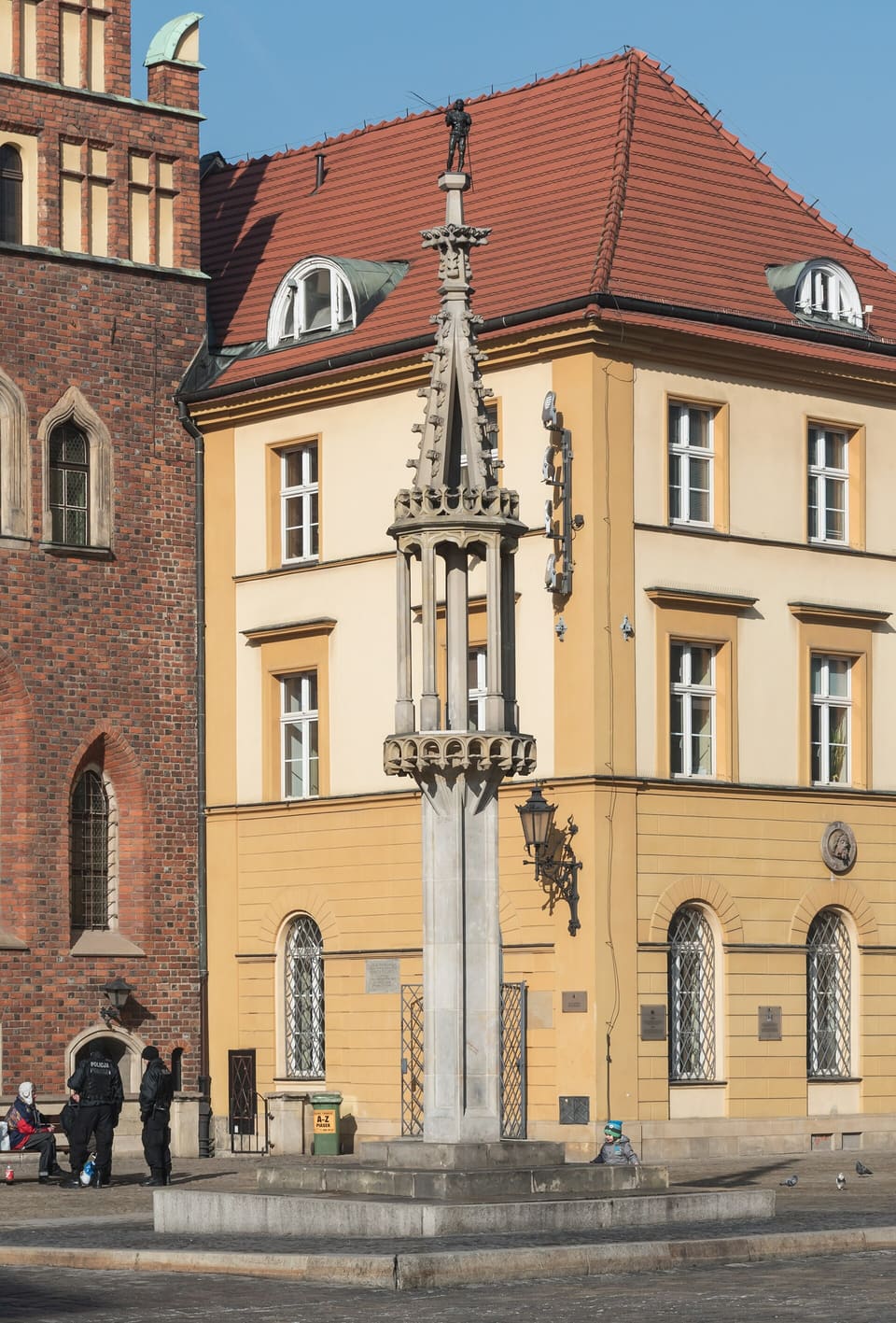
Jacek Halicki Wikimedia Commons CC BY-SA 4.0
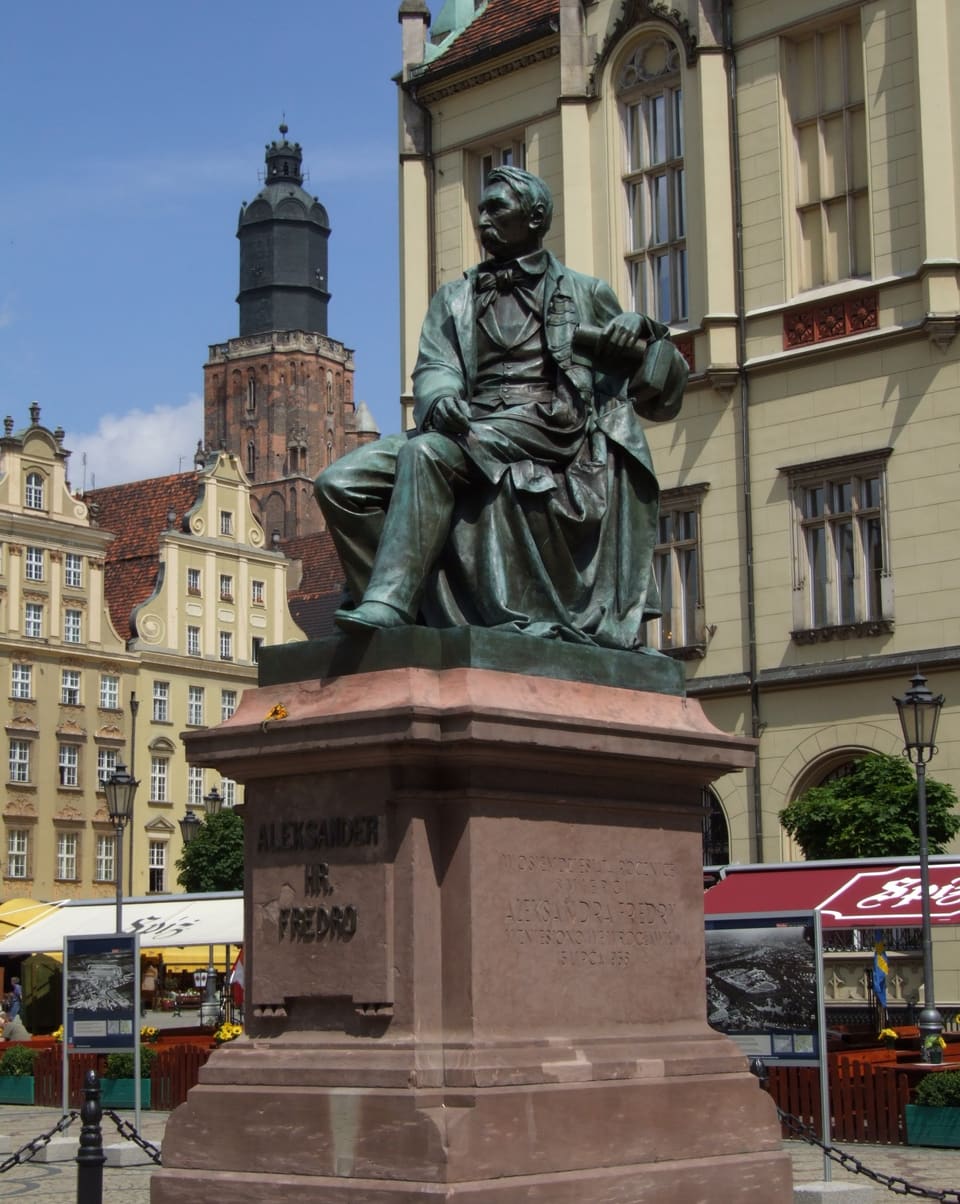
The Fredro monument. Leonard Marconi's bronze of the playwright Aleksander Fredro was made for Akademicki Square in Lwów and unveiled there in 1897. It shows him seated, a pen in his right hand. After the war it came to Wrocław, as the Panorama did: dismantled in Lwów, held for a time at Wilanów outside Warsaw, delivered to the square on 27 April 1956 and unveiled on 15 July that year, the eightieth anniversary of Fredro's death.
It stands on the southern side of the square, in front of the Town Hall, on the spot where an equestrian monument to Friedrich Wilhelm III of Prussia stood until it was taken down just after the war.
The pen does not stay in his hand. The city replaces it, on average, more than a dozen times a year; the replacement is a resin replica and costs about 600 złotys to make and fit.
Pudelek Wikimedia Commons CC BY-SA 4.0
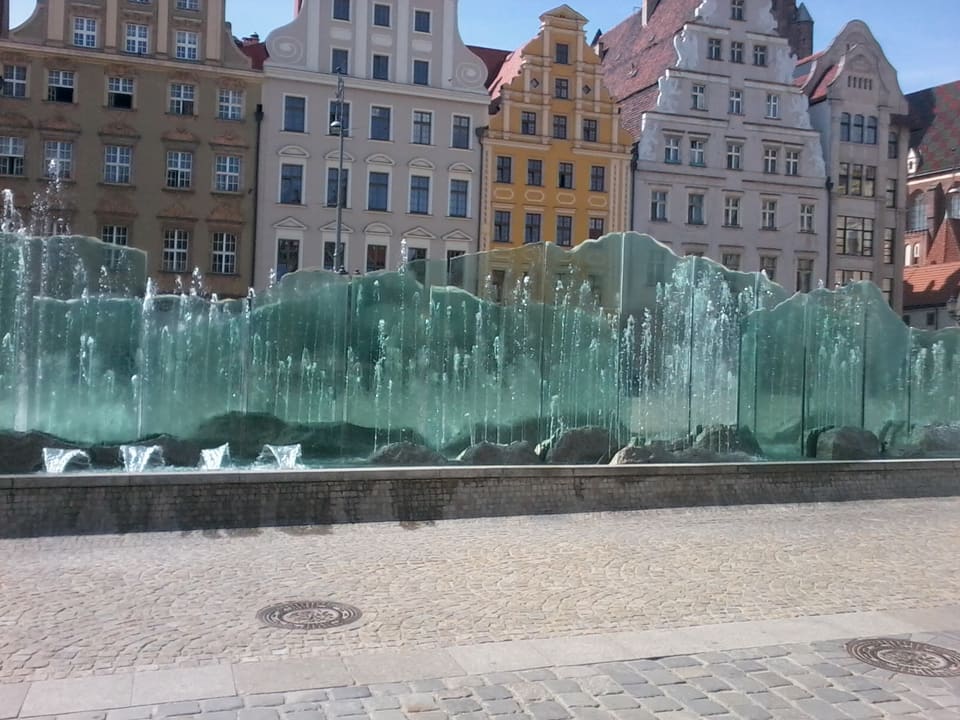
The Zdrój fountain. A fountain of glass panes stands on Gołębi Square, the western part of the Market Square. It was designed by the sculptor Alojzy Gryt and put up in 2001. Zdrój means a spring, and the name is also the city's joke on Bogdan Zdrojewski, its mayor when the fountain was built.
Adaś17 Wikimedia Commons CC BY-SA 3.0
Do it yourself
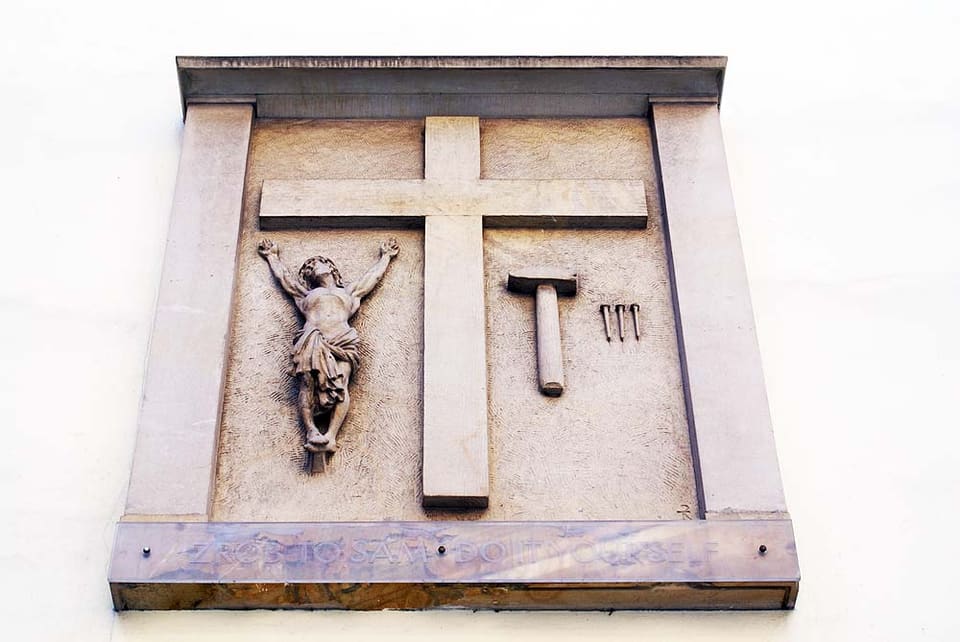
On the wall of Hansel that faces St Elizabeth's church, where most people walking through the arch never look, there is a sandstone panel: an empty cross, the figure of Christ standing apart from it on the left with his arms raised, a hammer hanging on the right, three nails beside it. A brass strip along the bottom reads ZRÓB TO SAM · DO IT YOURSELF. The invitation is the work.
It is by Eugeniusz Get-Stankiewicz (1942–2011), the graphic artist who lived and worked in the house, and it was walled in there in May 1997. It is a copy in stone of a piece he had made in 1976 out of plywood, canvas, a cross, a hammer, nails and a figure of Jesus, 93 by 65 centimetres, which belongs to the National Museum.
The carved head on the street front of the same house is a different work of his: a self-portrait.
Barbara Maliszewska Wikimedia Commons CC BY-SA 3.0 pl
The University and the Ossolineum
The Fencer
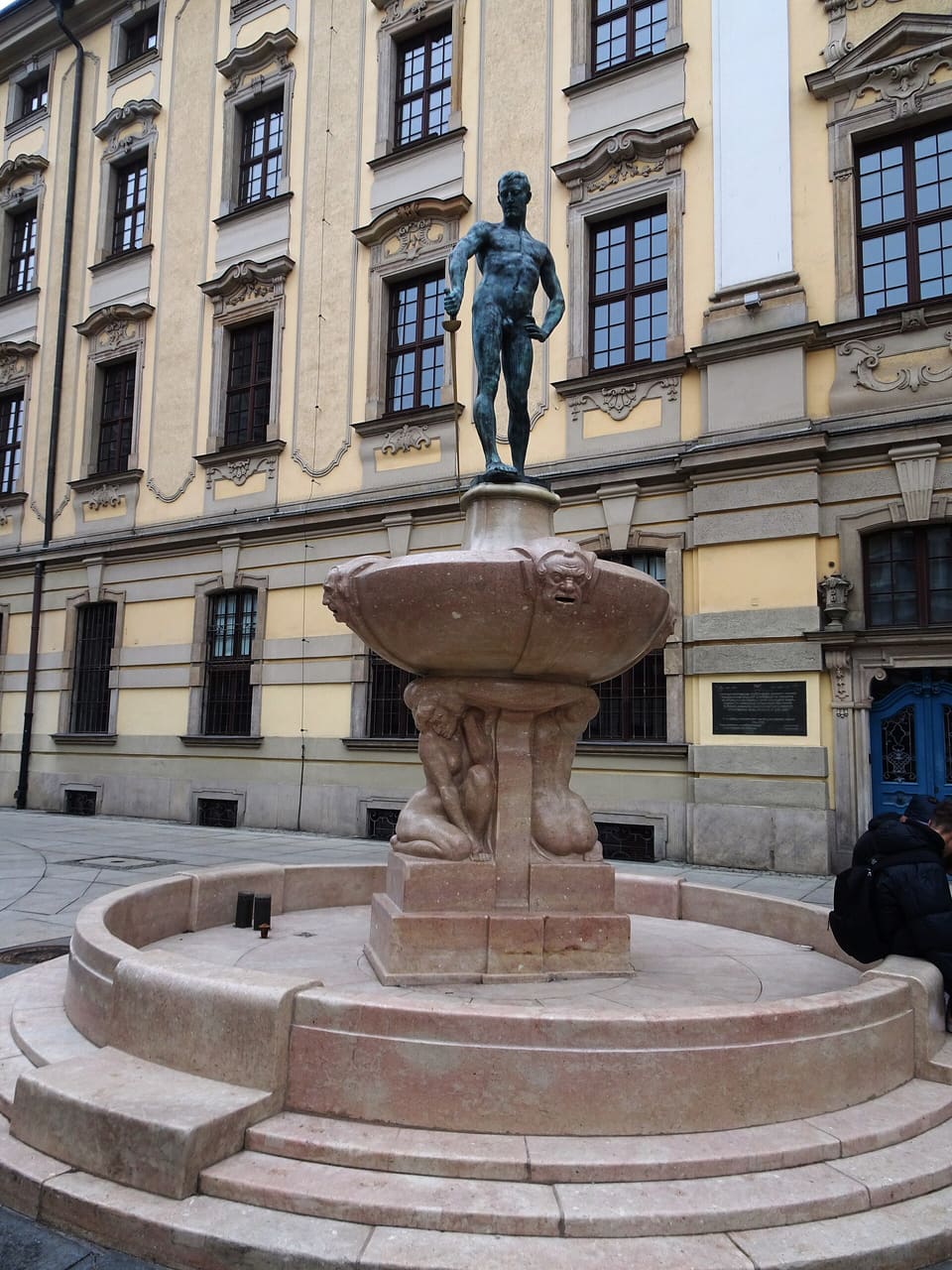
A fountain stands on Uniwersytecki Square in front of the main building, with a bronze figure of a naked young man holding a sword. It was put there on 26 November 1904. The sculptor was Hugo Lederer, a professor at the Academy of Fine Arts in Berlin, who had studied under the Wrocław sculptor Christian Behrens.
The fountain was unveiled again on 20 June 2023, after a renovation. The sword in the figure’s hand is now a copy: the university took the original into the main building, where it can be seen.
Palickap Wikimedia Commons CC BY 4.0
The Ossolineum garden
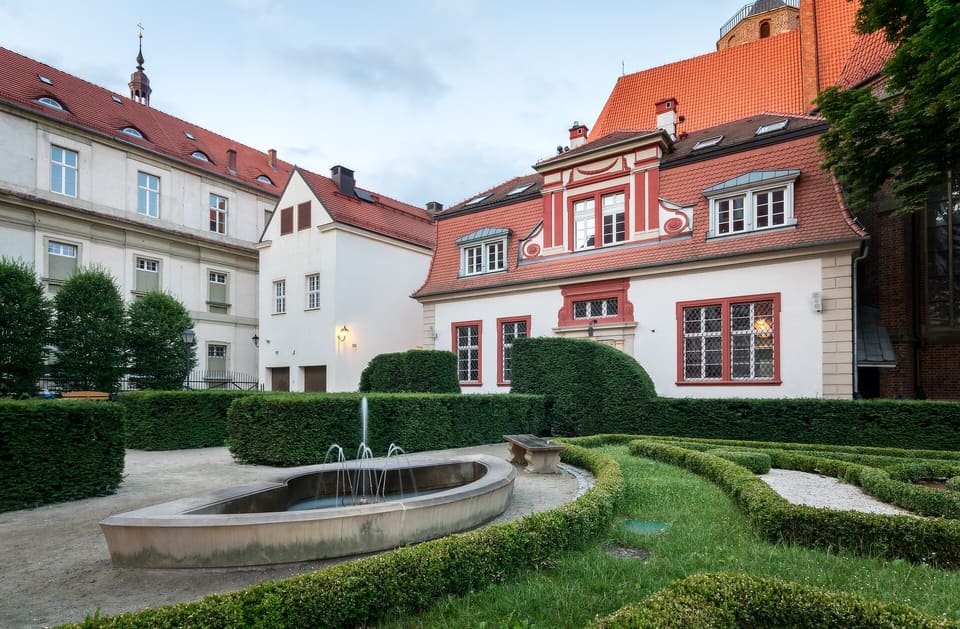
In it are a sandstone fountain, garden quarters in clipped ornament, a monument to the victims of the First World War, and a monument to Angelus Silesius, the baroque poet and mystic, made by Ewa Rossano and unveiled in October 2007.
Jar.ciurus Wikimedia Commons CC BY-SA 3.0 pl
The Old Town and the moat
Cupid on Pegasus
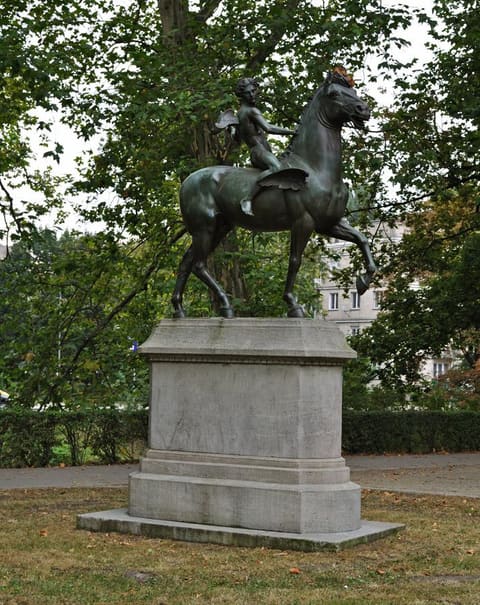
A winged Cupid rides Pegasus on a high stone plinth at the back of the Old Town Garden, by the park along the moat. Theodor von Gosen made it, in bronze, and it has stood here since 1914. Look at Cupid’s hand: he holds no bow.
Neo[EZN] Wikimedia Commons CC BY-SA 3.0

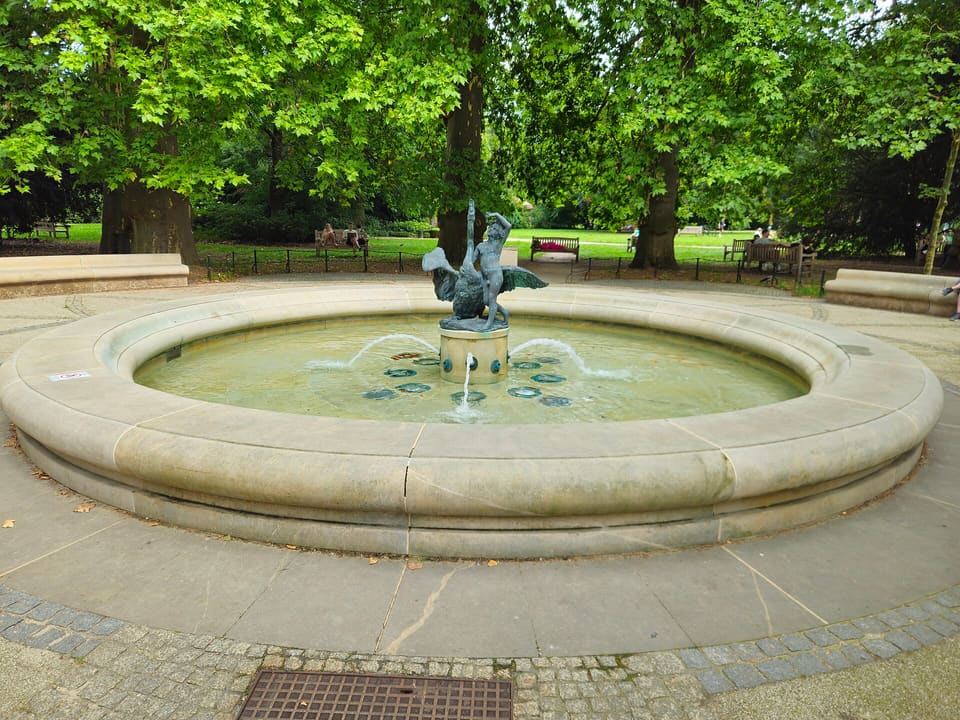
A boy with a swan
The same garden holds a fountain of a boy with a swan, which is a reconstruction.
Grzegorz Browarski Wikimedia Commons CC BY-SA 4.0
The Copernicus monument
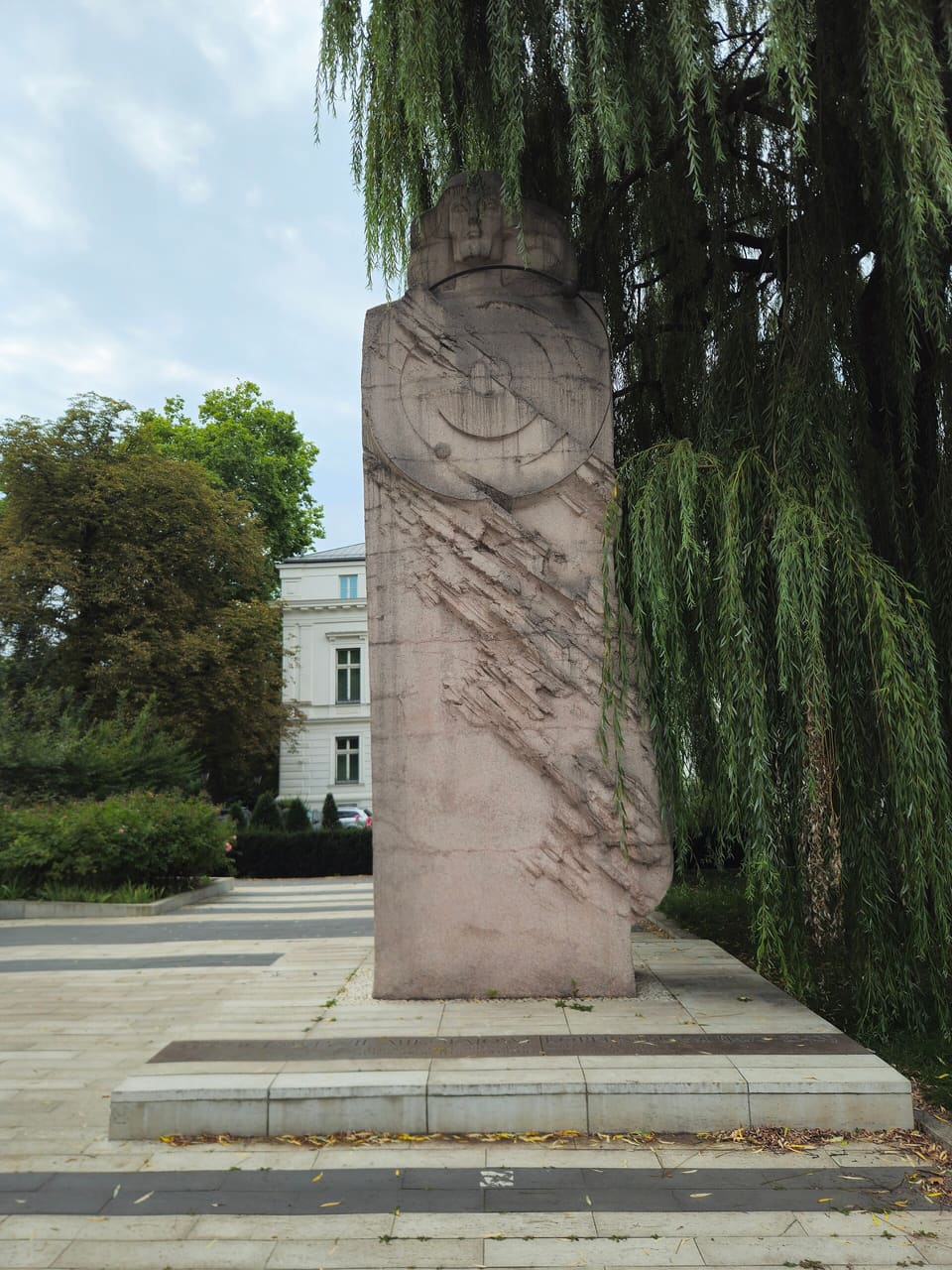
It stands on the paved square just outside the park's eastern entrance, where Wierzbowa Street meets Księdza Piotra Skargi Street — not in the park, though the park is named after him. It is not a conventional statue: a tapering stele carved with the circles of a heliocentric system, with a stylised head of the astronomer on top. Leon Podsiadły made it, and it was put up in 1974 for the five hundredth anniversary of Copernicus' birth, on the initiative of the Society of Friends of Wrocław and the Society of Friends of Astronomy.
Grzegorz Browarski Wikimedia Commons CC BY-SA 4.0
Fight and Victory
The fountain on plac Jana Pawła II, on the Promenada Staromiejska along the moat, dates from 1905 and was designed by the architect Bernard Sehring and the sculptor Ernst Seger. It was ordered by the committee of the Bismarck monument, which no longer exists.
Two sculptures flank the basin. On one a young man fights a lion; on the other he sits on it, having won. The figures were damaged in the war and restored in 1955. The fountain has been in the register of monuments since 1980, and it is lit after dark.
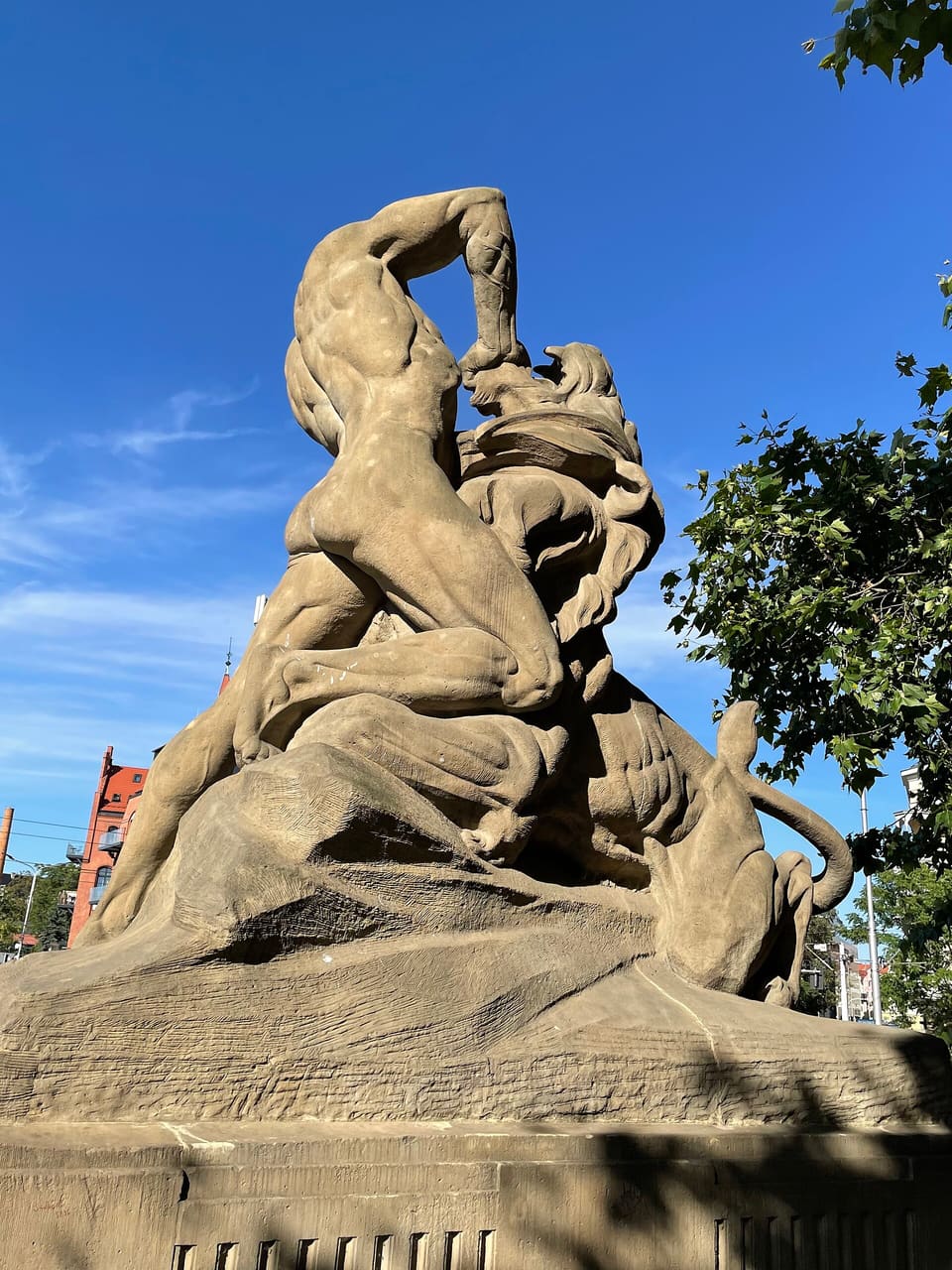
ViktoriaLi Wikimedia Commons CC BY-SA 4.0

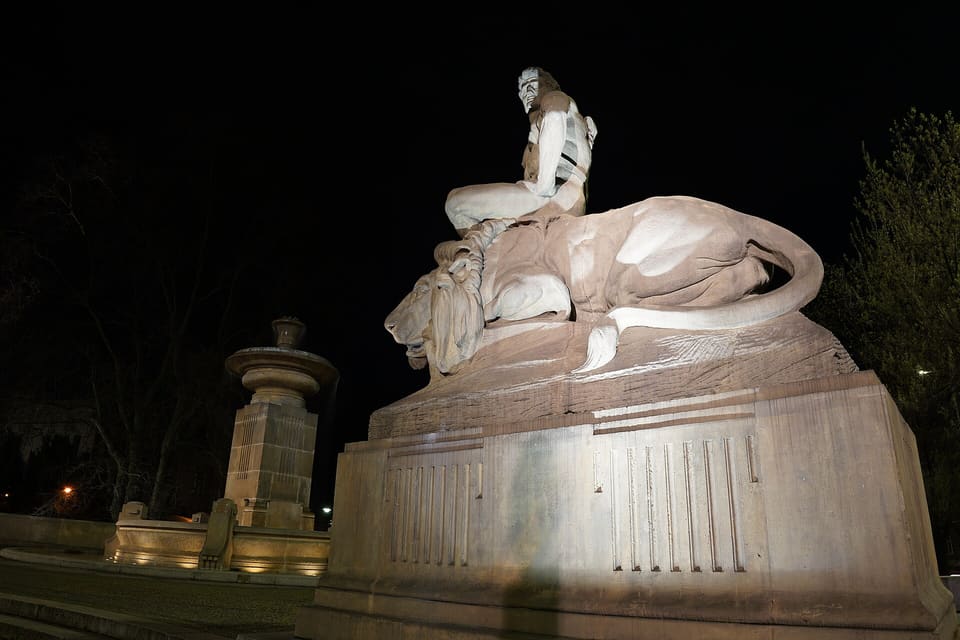
Strumyczek Wikimedia Commons CC BY-SA 4.0

Bolesław Chrobry
Where Świdnicka crosses the moat, a bronze king rides at the entrance to the Promenada Staromiejska. He is Bolesław Chrobry, the first crowned ruler of Poland, and he was unveiled on 15 September 2007. Three sculptors made him: Dorota Korzeniewska, Grażyna Jaskierska-Albrzykowska and Maciej Albrzykowski. With the plinth he stands about ten metres.
In his right hand is the Spear of St Maurice. His horse is small for him on purpose — it is drawn from the forest tarpan that lived in the lands of the first Piasts, and the chronicles remember Chrobry as a stout man. The bronze band round the plinth is the year 1000 and the Congress of Gniezno: Otto III handing over the spear, Chrobry giving back an urn with the ashes of St Adalbert, and on the other face a Ptolemaic map of Europe with modern borders laid over it. The inscription is in the three languages this city has been governed in — Polish, German and Czech.
He stands where an equestrian monument to Emperor Wilhelm I stood until it was pulled down on 21 October 1945. The plinth under him is not the old one: it was built new in 2006 and 2007, after the archaeologists had finished. For the sixty years between, the spot held a flowerbed and a plastic rose on a brick pedestal.
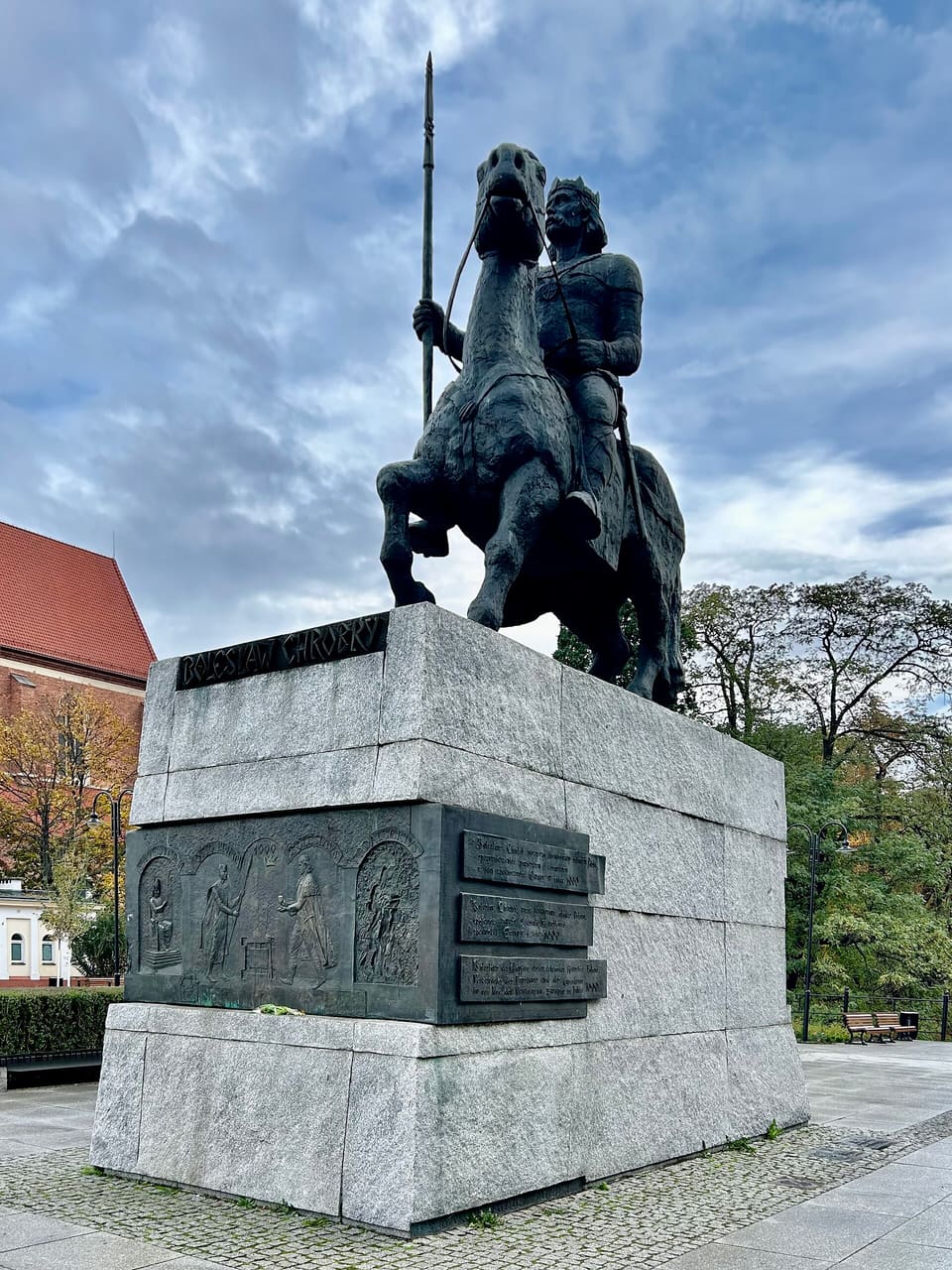
Olgierd Rudak Wikimedia Commons CC BY-SA 4.0
Further out
Multimedia Fountain
The Multimedia Fountain is a show of water, music and lighting. Some shows also project images onto a screen of water.
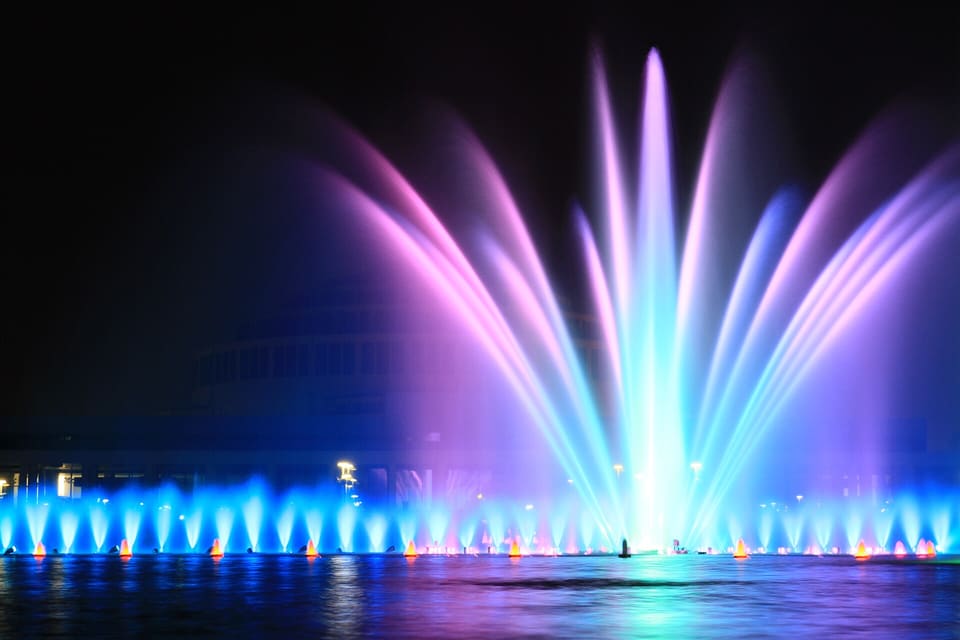
Tumi-1983 Wikimedia Commons Public domain
The fountain is at the Pergola, next to the Centennial Hall.
Train to Heaven
On the square beside the museum stands Pociąg do nieba, Train to Heaven, by the artist Andrzej Jarodzki, unveiled in 2010. It is a real steam locomotive, the goods engine Ty2-1035, built in 1944, reared up on a length of track with 32 metal sleepers so that it points at the sky. The whole work is 21 metres tall and weighs 82 tonnes.
Jarodzki has said the train stands for reaching for something impossible. The city describes it as a dream fulfilled, going beyond the impossible.
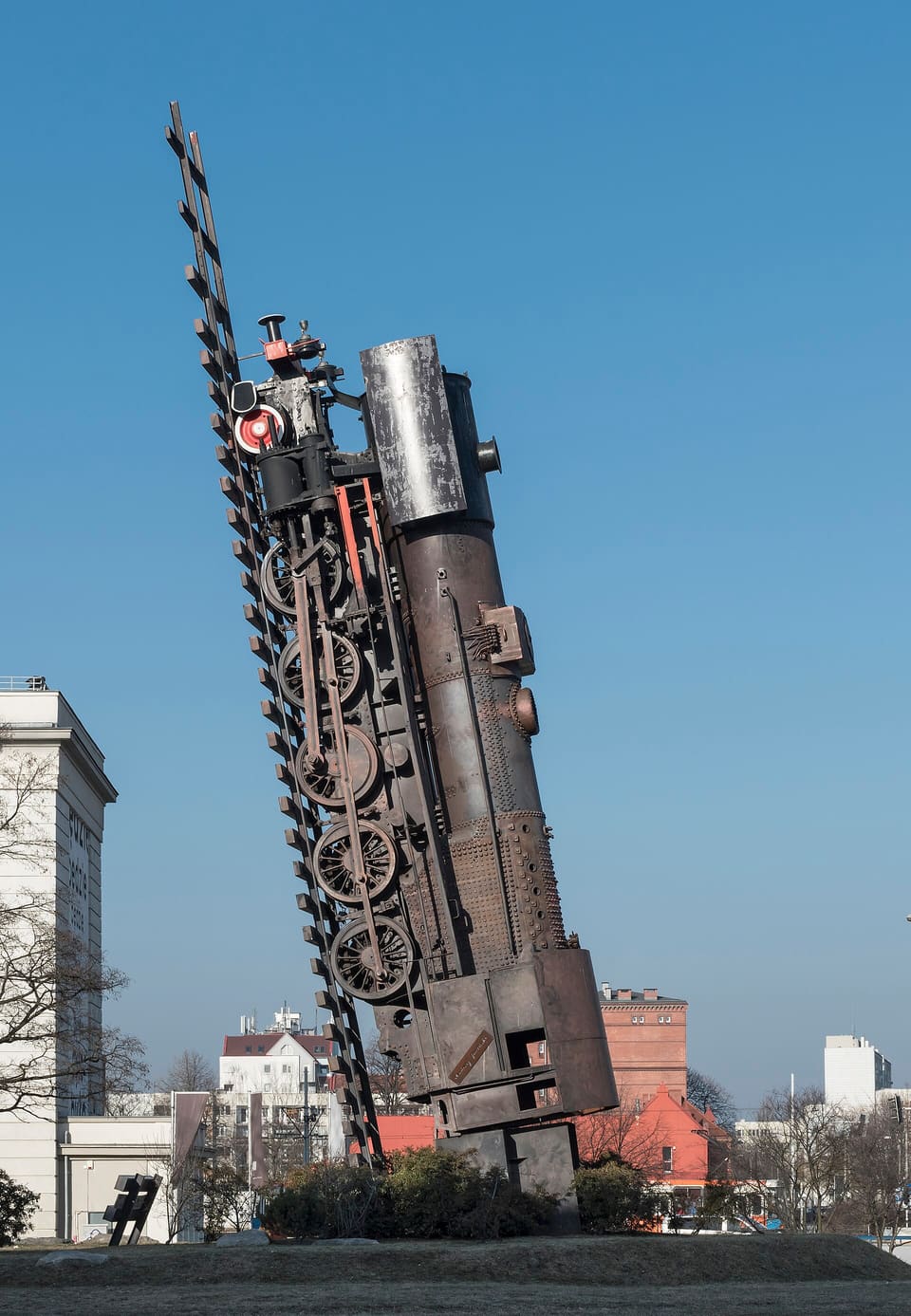
Jacek Halicki Wikimedia Commons CC BY-SA 4.0
Dalí’s Profile of Time
In the shopping gallery stands a bronze by Salvador Dalí, Profil czasu, Profile of Time: just under four metres high, about 1,300 kilograms, patinated in green and brown, on a pedestal. It is the third cast of a series of eight made between 1977 and 1984, and it follows his painting of 1931, The Persistence of Memory.
It stood in the Arkady Wrocławskie gallery before it was moved, in 2012, to the front of the Sky Tower entrance, where the photograph below shows it. In August 2024 it was moved indoors, under the roof of the shopping gallery.
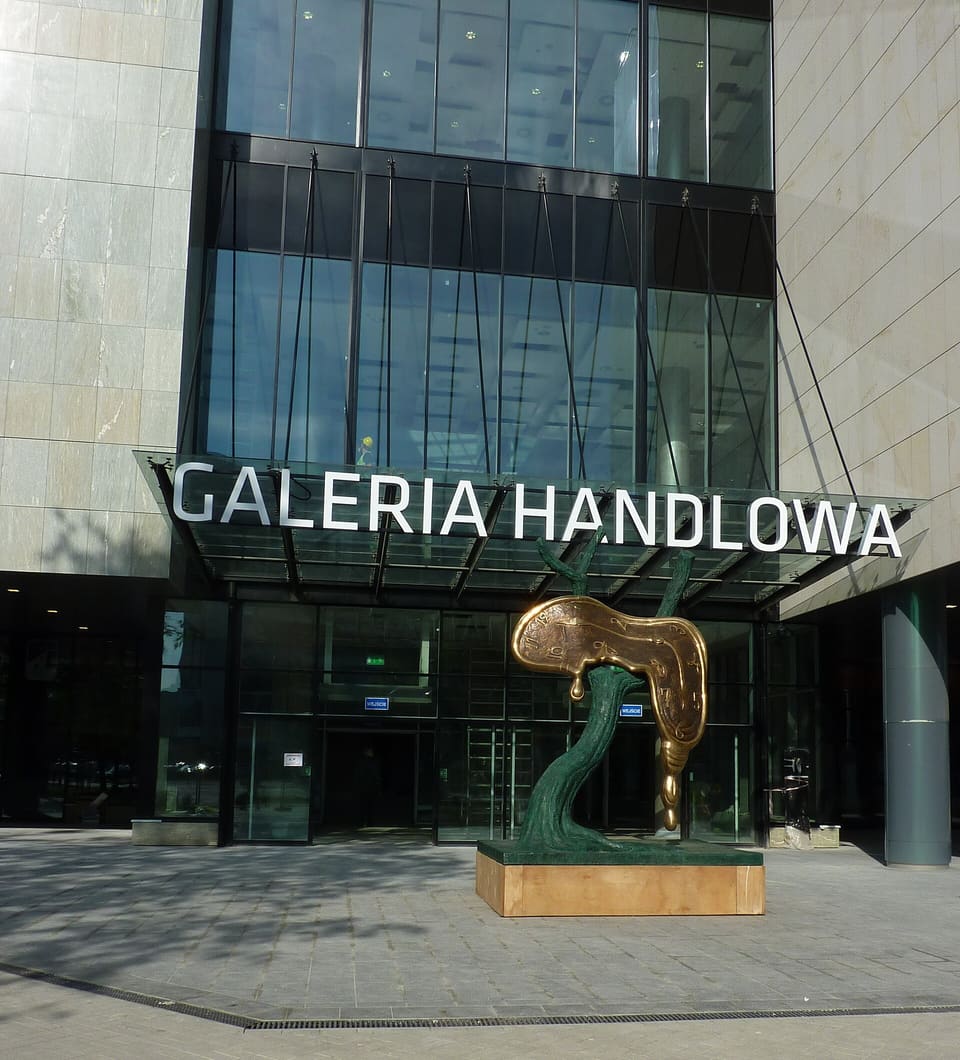
Salvador Dali, fot. Julo Wikimedia Commons Public domain