
Poznań
A city with a Renaissance town hall on its Old Market Square and Poland’s first cathedral on Ostrów Tumski, reached from Wrocław Główny by direct PKP Intercity train.
A.Savin Wikimedia Commons CC BY-SA 3.0
What it is
Two parts of Poznań are what a visitor goes for on a day from Wrocław: the Old Market Square in the Old Town, and Ostrów Tumski, the oldest part of the city.
The Old Market Square
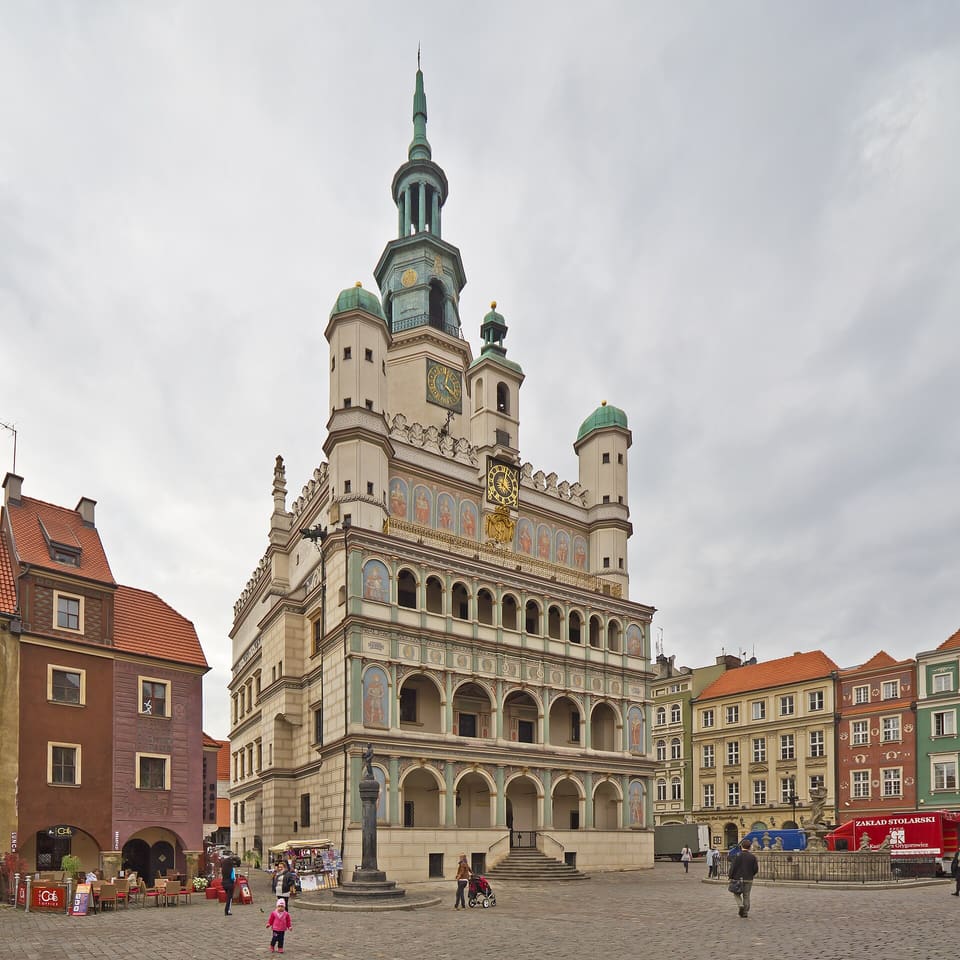
The Old Market Square (Stary Rynek) has the 16th-century Renaissance town hall in the middle. Every day at noon the mechanical billy goats (koziołki) come out on the town hall’s tower.
The Italian architect Giovanni Battista di Quadro rebuilt the town hall in the Renaissance style in 1550–1560. The square was laid out around 1253, and each of its sides is about 140 metres long.
Beside the town hall stands a row of narrow, brightly painted arcaded houses, the domki budnicze. The town hall houses the city’s museum, Muzeum Poznania.
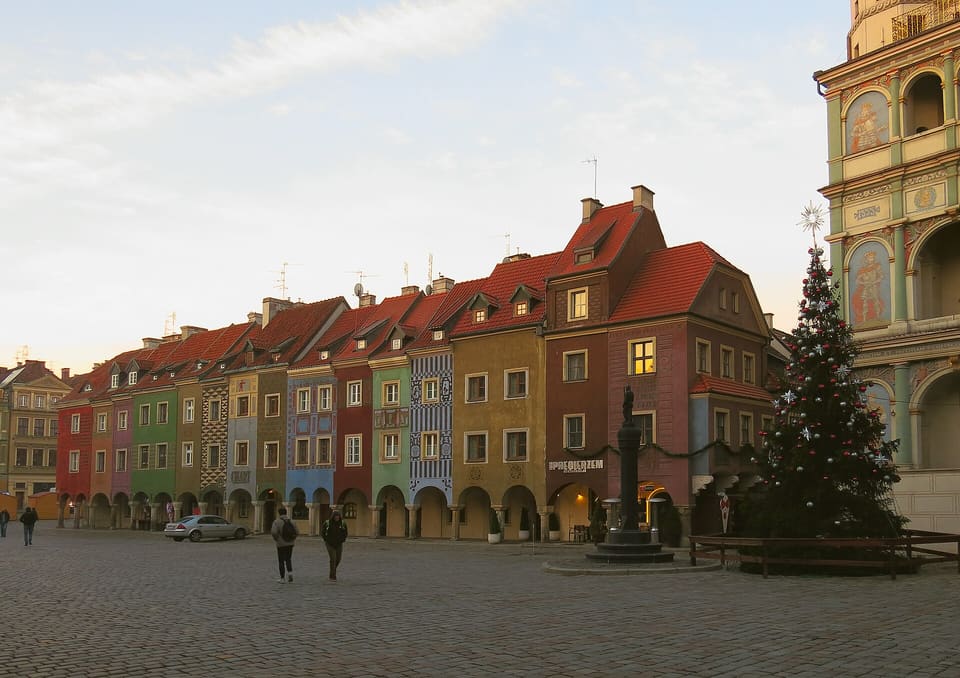
The domki budnicze beside the town hall.
Аимаина хикари Wikimedia Commons CC0
Ostrów Tumski
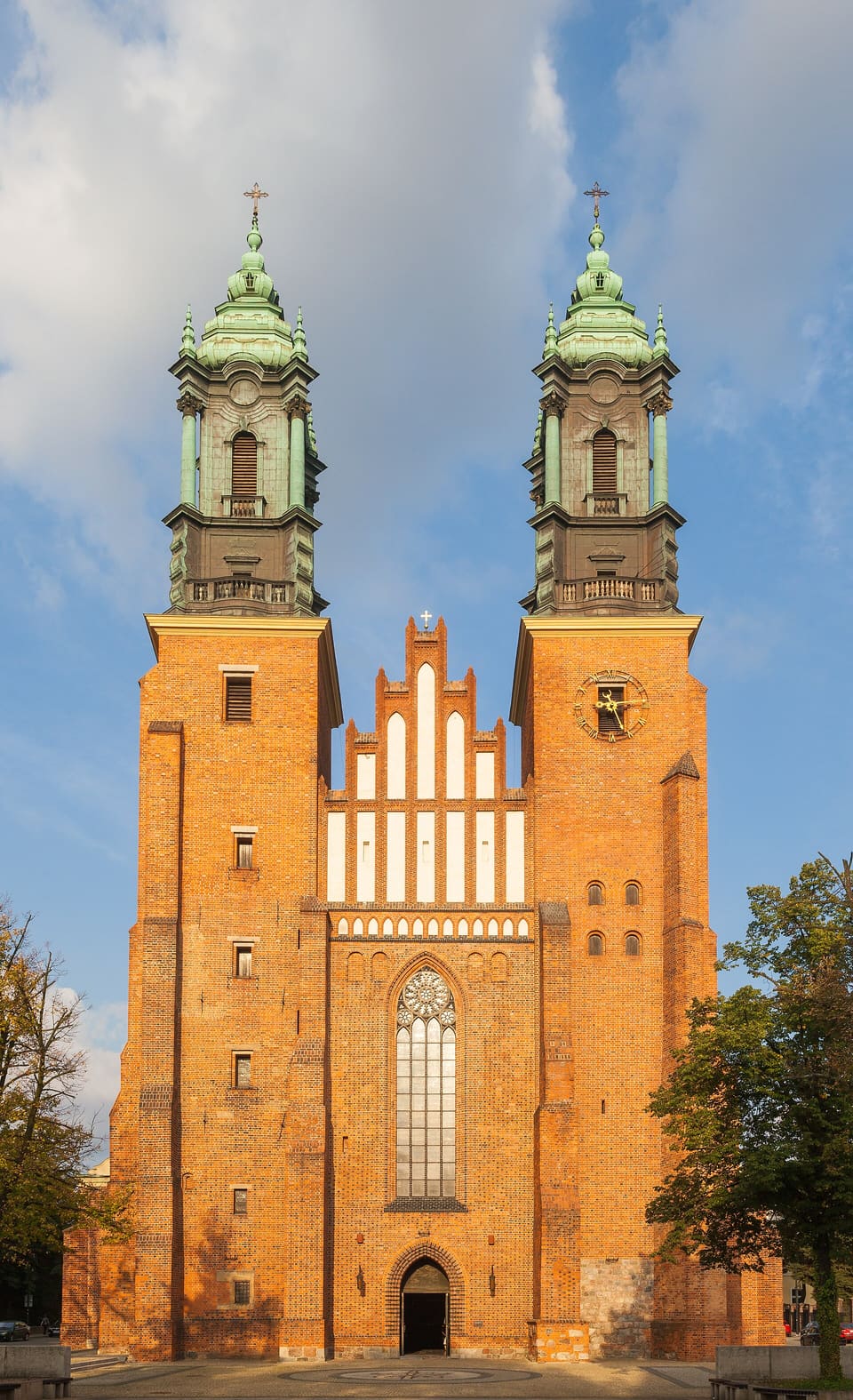
Poznań Cathedral, on Ostrów Tumski, was Poland’s first cathedral and dates from the 10th century. Inside is the Golden Chapel, a 19th-century memorial to the first rulers of Poland.
Diego Delso Wikimedia Commons CC BY-SA 4.0
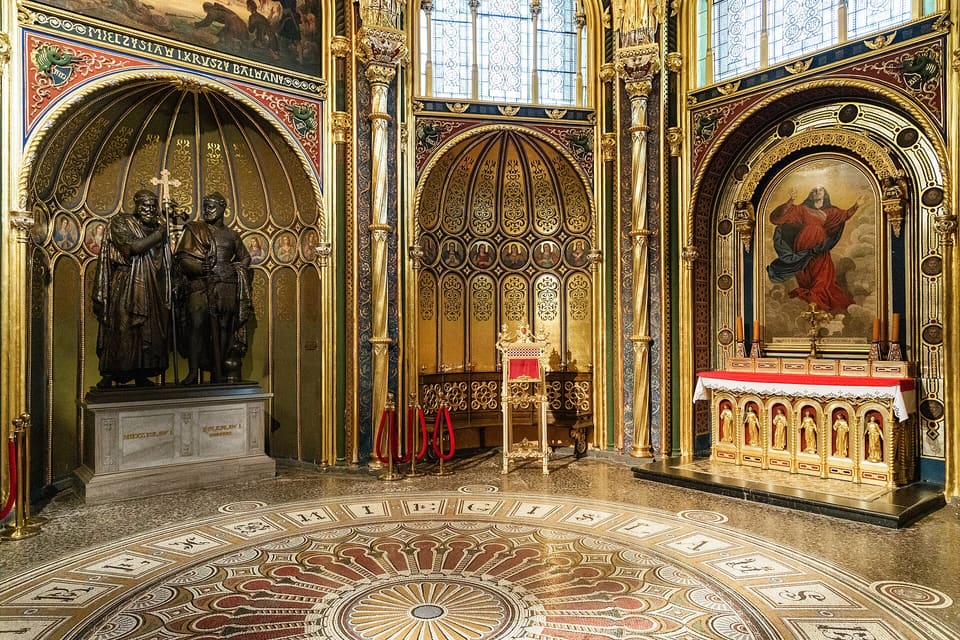
The Golden Chapel in the cathedral.
Łukasz Bakuła Wikimedia Commons CC BY-SA 4.0
Across the river from the cathedral, Porta Posnania tells the story of Ostrów Tumski and the beginnings of the Polish state, with multimedia rather than museum exhibits.
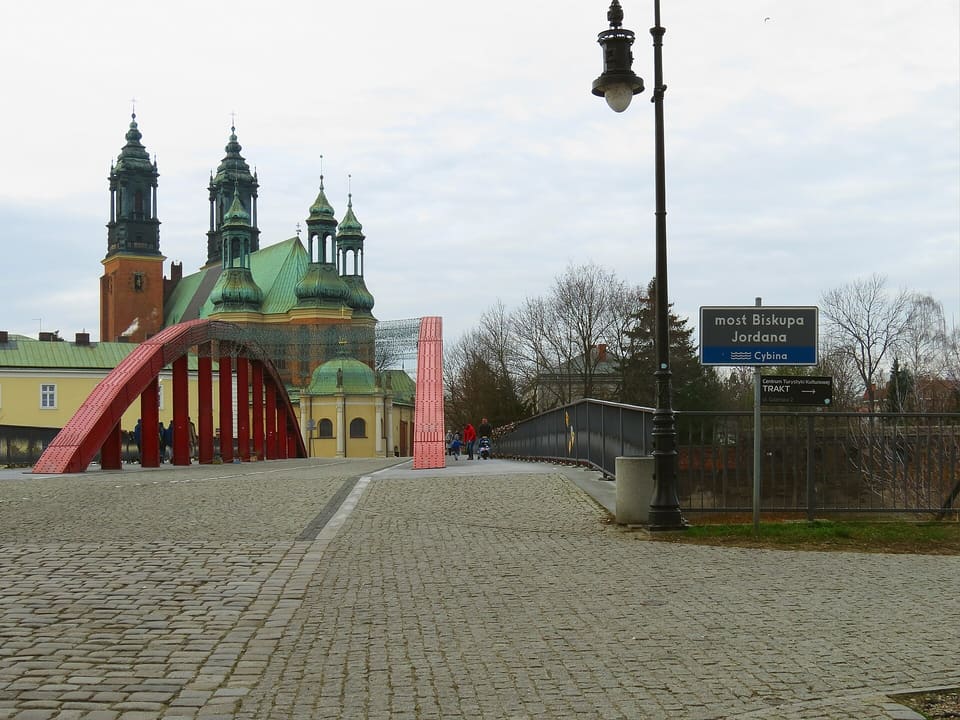
Bishop Jordan Bridge, towards the cathedral.
Аимаина хикари Wikimedia Commons CC0
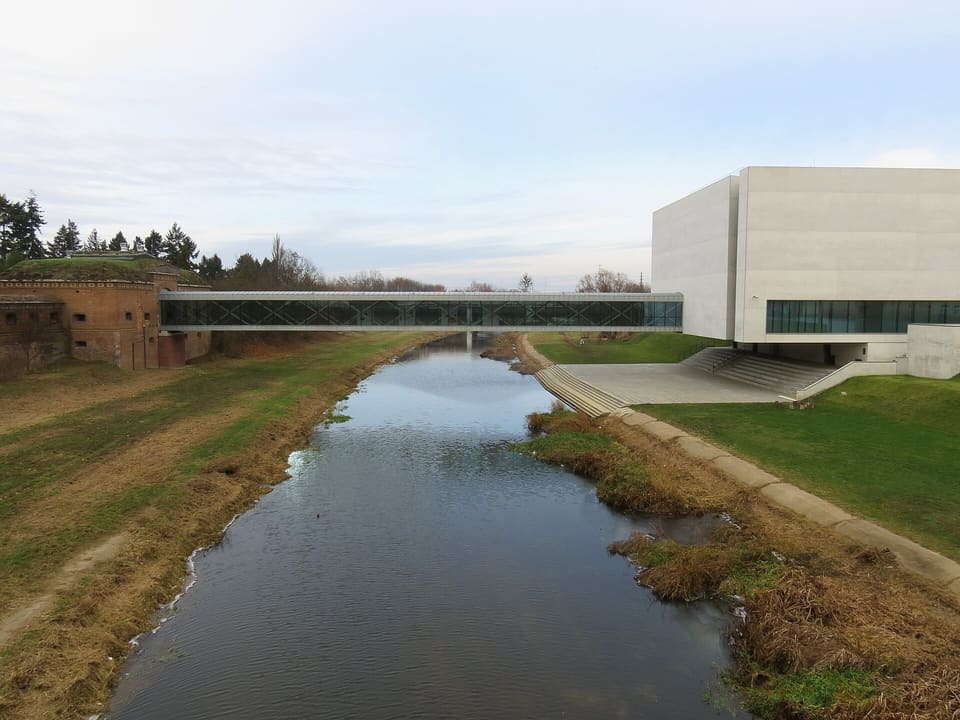
Porta Posnania, by the river.
Аимаина хикари Wikimedia Commons CC0
A day on foot: from the station to Ostrów Tumski
The map follows one day out: the PKP Intercity train from Wrocław Główny along line 271 to Poznań Główny, then on foot past the Imperial Castle and the Fara church to the Old Market Square, and across the river to the cathedral and Porta Posnania. The walk drawn is about 4 km, measured along the route. It plays by itself; the stops are listed under it.
Map data © OpenStreetMap contributors, under the ODbL: the rail line, roads, rivers, streets, buildings, water and woods. The walk is routed with OSRM on OpenStreetMap data.
- Poznań Główny station
- Imperial Castle
- Fara church
- Old Market Square
- Cathedral
- Porta Posnania
The Imperial Castle was completed in 1910 as a residence for the German emperor Wilhelm II. Today it is the Zamek Culture Centre.
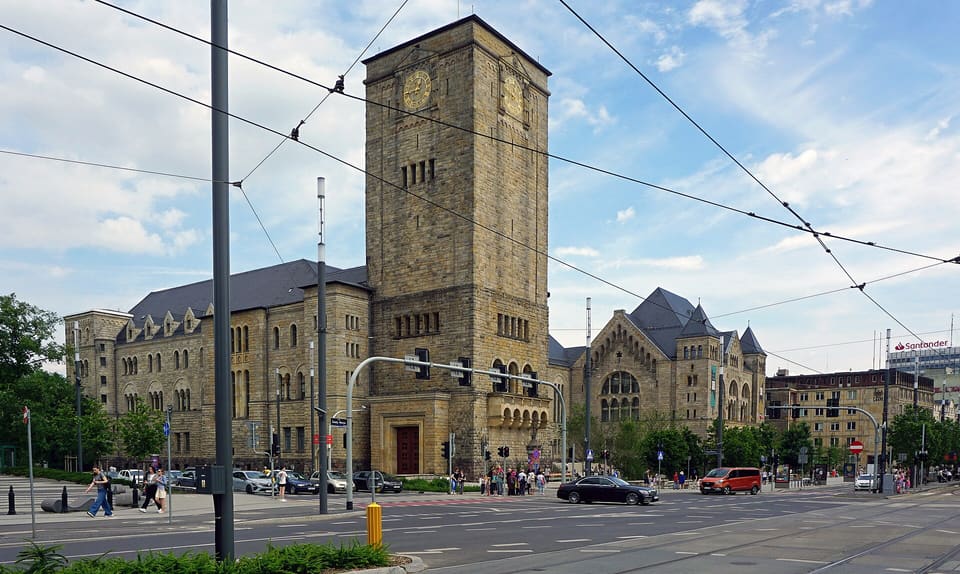
The Imperial Castle, completed in 1910.
Igor123121 Wikimedia Commons CC BY 4.0
South of the square, the Fara is a Baroque church built by the Jesuits between 1651 and 1701.
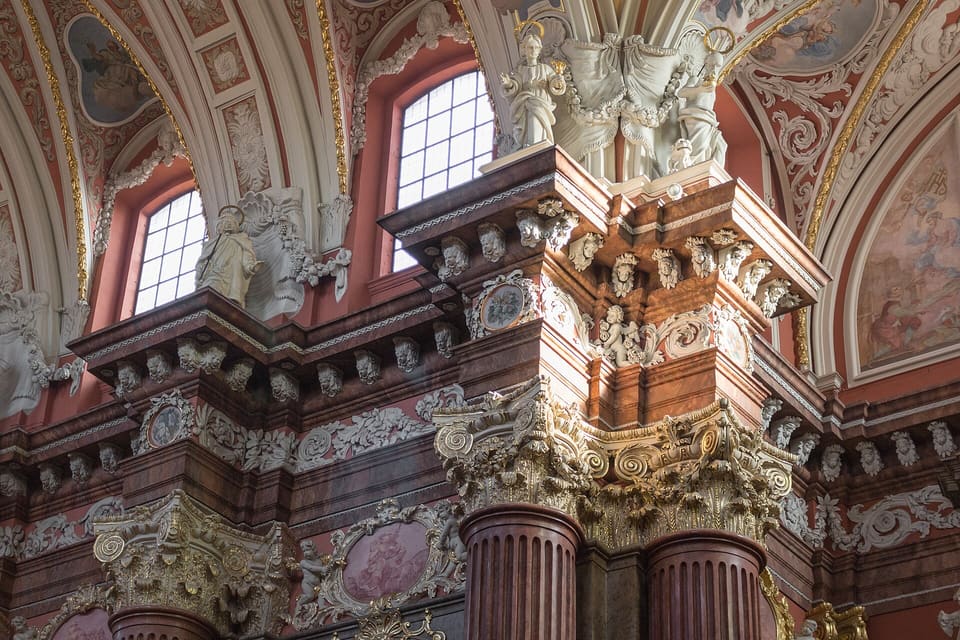
The Baroque interior of the Fara.
Michalpe96 Wikimedia Commons CC BY-SA 4.0
Getting there from Wrocław
PKP Intercity runs direct trains from Wrocław Główny to Poznań Główny, among them the Baltic Express between Prague and Gdynia. More on long-distance trains is on the trains page.
Links
- PKP Intercity: departures by station (in Polish) intercity.pl
- Poznań Tourism Organisation: the Old Market Square and the billy goats (in English) visitpoznan.pl
- Porta Posnania (in English) bramapoznania.pl
- The Imperial Castle: history and visiting, from the Zamek Culture Centre (in Polish) ckzamek.pl
- The town hall museum, from the National Museum (in Polish) mnp.art.pl
- Poznań Cathedral (in Polish) katedra.archpoznan.pl
- The Fara (in English) fara.archpoznan.pl